Self-Publishing Guide: How to Self Publish a Book Step by Step
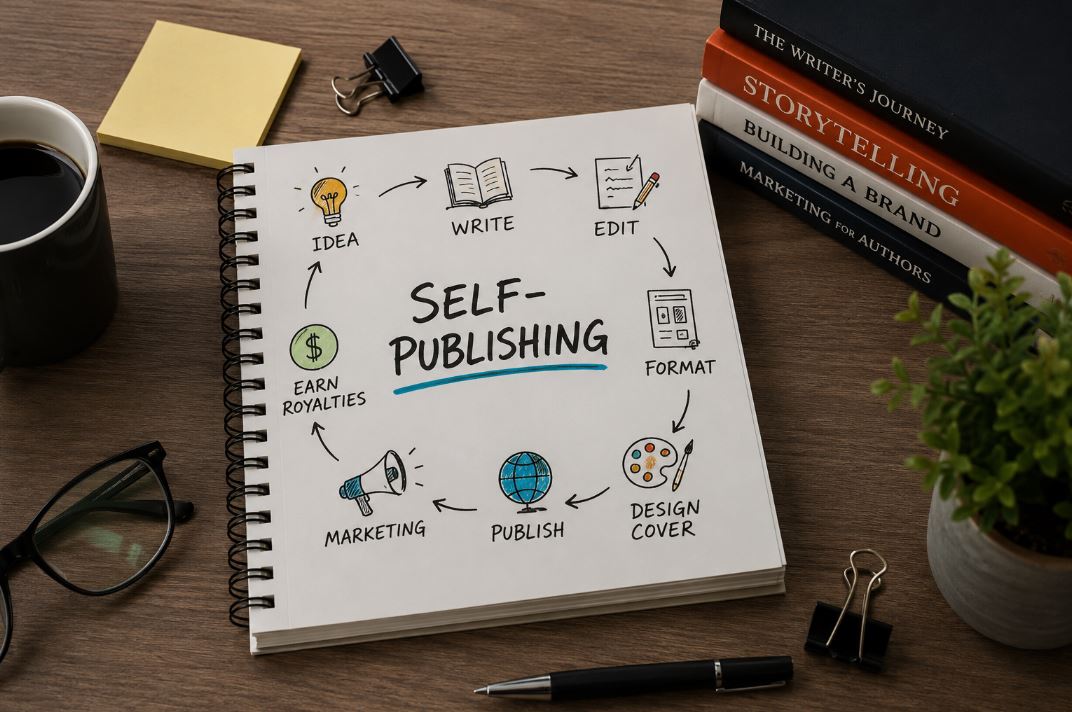
Self-publishing gives you complete control over your book, from the manuscript to the royalties. It also means you’re responsible for every stage of the publishing process, including editing, formatting, cover design, ISBNs, publishing, distribution, and marketing.
Fortunately, you don’t need to master everything yourself. Some tasks are easy to handle on your own, while others are often worth outsourcing to professionals.
At Writers of the West, we’ve walked hundreds of authors through this exact process, from a ghostwriter’s first outline to the day a book goes live on Amazon. We’ve seen paperback formatting bounced back twice over a trim-size error, watched a memoirist agonize over KDP Select for three weeks before deciding against it, and seen a first-time business author’s book climb into an Amazon bestseller subcategory within a month of a well-timed launch push. This guide is built from those runs, not from Amazon’s help docs.
This guide walks you through the entire self-publishing process in the order you’ll complete it, explains where AI can genuinely help, and highlights the decisions that matter most along the way.
Self-Publishing at a Glance
| Step | What You’ll Do | Difficulty | Typical Time | AI | DIY or Hire? |
|---|---|---|---|---|---|
| 1. Write Your Book | Complete your manuscript yourself, with AI, or with a ghostwriter. | ★★★★★ | Weeks to months | ✅ | Either |
| 2. Edit Your Manuscript | Improve structure, clarity, grammar, and readability. | ★★★★★ | 1–6 weeks | ⚠️ | Recommended |
| 3. Format Your Book | Create EPUB and print-ready PDF files. | ★★★☆☆ | 1–5 days | ⚠️ | Either |
| 4. Design Your Cover | Prepare ebook, paperback, and hardcover covers. | ★★★★☆ | 2–14 days | ⚠️ | Recommended |
| 5. Choose an ISBN | Decide between Amazon’s free ISBN or your own. | ★★☆☆☆ | <1 hour | ❌ | DIY |
| 6. Publish on Amazon KDP | Upload your files and publish your book. | ★★☆☆☆ | 1–3 days | ⚠️ | DIY |
| 7. Expand Distribution | Make your book available beyond Amazon. | ★★★☆☆ | 1–2 weeks | ❌ | DIY |
| 8. Market Your Book | Promote your book online and offline. | ★★★★☆ | Ongoing | ✅ | Either |
| 9. Create an Audiobook (Optional) | Publish an audiobook edition. | ★★★☆☆ | 2–8 weeks | ⚠️ | Either |
Do You Need to Do Everything Yourself In Self Publishing?
Not at all.
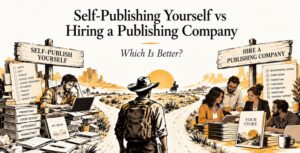
Self-publishing means you own the publishing process, not that you have to complete every task yourself. Many successful independent authors write the manuscript, hire an editor and cover designer, upload the files to Amazon themselves, and handle marketing as the book grows.
| Task | Commonly DIY | Commonly Outsourced |
|---|---|---|
| Writing | ✓ | ✓ |
| Editing | ✓ | |
| Formatting | ✓ | ✓ |
| Cover Design | ✓ | |
| Amazon Upload | ✓ | |
| Distribution | ✓ | |
| Marketing | ✓ | ✓ |
| Audiobook | ✓ | ✓ |
As you read through this guide, think of each step as a separate decision. You can do some yourself, outsource others, and still remain the publisher of your book.
Step 1: Write Your Book
Difficulty: ★★★★★ | Time: Weeks to months | AI: Great for brainstorming and organizing ideas | DIY or Hire? Either
Every published book starts with a finished manuscript. Whether you write it yourself, dictate your ideas, use AI as an assistant, or hire a ghostwriter, the goal is the same: complete the first draft before worrying about editing, cover design, or publishing.
Should You Write the Book Yourself?
If you enjoy writing and have the time to commit to it, writing the manuscript yourself gives you complete creative control. It also costs the least, making it the most popular option for first-time authors.
The biggest challenge isn’t talent. It’s consistency.
Many authors spend months rewriting their opening chapters instead of finishing the manuscript. A better approach is to complete the first draft from beginning to end before worrying about polishing individual sections. Once the manuscript exists, improving it becomes much easier.
Can AI Help You Write a Book?
Yes, but it works best as an assistant rather than an author.
AI can help you brainstorm ideas, build chapter outlines, organize research, summarize interviews, and rewrite awkward passages. If you’re writing a memoir or business book, another effective workflow is to record yourself talking through your ideas, transcribe the recordings, and use AI to organize them into a structured draft before rewriting them in your own voice.
Where AI still struggles is originality. It can’t replace your experiences, judgment, or writing style, and heavily AI-generated manuscripts often require substantial editing to sound natural. Think of it as a productivity tool, not a shortcut to a finished book.
Should You Hire a Ghostwriter?
If you have valuable knowledge but little time to write, working with a ghostwriter can be a practical alternative.
Instead of writing from scratch, you’ll typically provide interviews, notes, recordings, or existing material that the ghostwriter turns into a complete manuscript while preserving your voice and ideas. This approach is common among entrepreneurs, executives, public speakers, and professionals who want to publish a book without spending hundreds of hours writing it themselves.
You can hire ghostwriters through freelance marketplaces like Reedsy or Fiverr, or work with a managed ghostwriting company that matches your project with a writer based on your genre, subject matter, and goals.
Which Option Is Best?
| Option | Best For |
|---|---|
| Write it yourself | Authors who enjoy writing and have the time to finish a manuscript. |
| Record ideas + AI | Memoirs, business books, and authors who think better out loud. |
| Ghostwriter | Busy professionals who want expert writing support. |
The best method is the one that gets your manuscript finished. Everything else in the self-publishing process begins there.
Step 2: Edit Your Manuscript
Difficulty: ★★★★★ | AI: Good for grammar and basic revisions | DIY or Hire? Professional editing is usually worth the investment
A completed manuscript is rarely ready to publish. Editing improves readability, fixes inconsistencies, strengthens the structure, and catches mistakes that are almost impossible to spot in your own writing.
Can You Edit Your Own Book?
You should always review your own manuscript before sending it to anyone else. Reading it aloud, taking a break for a few weeks, or using text-to-speech software can help you catch awkward sentences and repetitive wording.
Self-editing works well for early revisions, but it has limitations. After spending weeks or months writing a book, it’s difficult to notice gaps in logic, pacing issues, or passages that only make sense because you already know what you meant.
Can AI Edit a Book?
AI is excellent at catching grammar mistakes, improving sentence flow, shortening wordy paragraphs, and identifying repeated phrases. It’s a valuable first editing pass, especially if you’re working with a rough draft.
It isn’t a replacement for a professional editor.
AI often struggles with context, pacing, tone, and larger structural issues. It may also introduce factual errors or rewrite passages in ways that weaken your unique voice. Treat it as another editing tool, not the final reviewer.
If you’re using AI extensively, remember that works created entirely by AI without sufficient human authorship generally aren’t eligible for U.S. copyright protection. Using AI to assist with editing or brainstorming is different from asking it to create the entire book.
What Type of Editing Do You Need?
Not every manuscript needs every type of book editing service, but it’s helpful to understand the difference.
| Editing Type | What It Focuses On | Best Time |
|---|---|---|
| Developmental Editing | Structure, pacing, organization, character development, and overall content. | First |
| Line Editing | Style, clarity, tone, sentence flow, and readability. | After structural revisions |
| Proofreading | Grammar, spelling, punctuation, formatting, and final typos. | Last |
For most first-time authors, developmental editing has the biggest impact because it improves the book itself rather than simply correcting mistakes.
Common Mistake
Many authors pay for formatting before editing.
Every major edit changes page lengths, chapter breaks, and pagination, meaning you’ll likely have to format the entire book again.
Always finish editing before moving on.
Step 3: Format Your Book
Difficulty: ★★★☆☆ | AI: Limited | DIY or Hire? Either
Formatting transforms your manuscript into a professional book readers can actually purchase and read.
This stage isn’t about improving the writing. It’s about presentation.
Ebook vs Print Formatting
One of the biggest surprises for first-time authors is that ebooks and print books require different files.
| Format | File Type |
|---|---|
| Ebook | EPUB |
| Paperback | Print-ready PDF |
| Hardcover | Print-ready PDF |
A Word document isn’t your finished book. It still needs to be converted into files that publishing platforms can process correctly.
Can You Format a Book Yourself?
Yes.
If your book is mostly text with few images, tools like Microsoft Word, Atticus, Vellum (Mac only), and Adobe InDesign can all produce professional results.
You’ll still need to understand basics like:
- trim size
- margins
- gutter
- page numbers
- chapter breaks
- table of contents
- image placement
These details affect the reading experience more than many new authors realize.
Should You Hire a Formatter?
If your manuscript includes images, tables, footnotes, or complex layouts, professional formatting services is often worth the cost.
It also saves time if you’re publishing multiple formats, since ebook and print editions usually require separate preparation.
Common Mistake
Formatting before the manuscript is finalized.
Even small edits can shift page numbers, chapter lengths, and image placement, forcing you to redo much of the work.
Step 4: Design Your Book Cover
Difficulty: ★★★★☆ | AI: Helpful for concepts and artwork | DIY or Hire? Usually worth hiring
Readers don’t buy books because of the cover, but they often decide whether to click because of it.
A professional cover communicates the genre, tone, and quality of your book within seconds.
One Cover Doesn’t Fit Every Format
Each edition requires different files.
| Book Format | Required Cover |
|---|---|
| Ebook | Front cover only |
| Paperback | Front, spine, and back cover |
| Hardcover | Front, spine, back cover, plus wrap dimensions |
The spine width depends on your final page count, which is another reason the manuscript should be completely edited and formatted before the cover is finalized.
Can AI Design a Book Cover?
AI image generators are excellent for brainstorming concepts or creating original artwork.
However, they don’t usually produce upload-ready book covers. You’ll still need to account for trim size, bleed, spine width, typography, barcode placement, and platform specifications.
Many authors use AI for early concepts before having a designer prepare the finished production files.
Should You Hire a Cover Designer?
If your goal is to compete commercially, the answer is usually yes.
Experienced book design services understand genre conventions, typography, composition, and how to create a thumbnail that still stands out on Amazon search results.
A great cover doesn’t just look attractive. It immediately signals to readers what kind of book they’re about to buy.
Common Mistake
Designing the cover before the page count is finalized.
Paperback and hardcover spine widths are calculated from the final formatted manuscript. Any major change afterward usually means redesigning the cover.
Step 5: Choose Your ISBN
Difficulty: ★★☆☆☆ | AI: Not needed | DIY or Hire? DIY
Before publishing, you’ll need to decide whether to use Amazon’s free ISBN or purchase your own. The right choice depends on how much control you want over your publishing imprint and where you plan to distribute your book.
What Is an ISBN?
An ISBN (International Standard Book Number) is a unique identifier assigned to a specific edition of a book. Retailers, distributors, libraries, and wholesalers use it to identify and track books.
Each format requires its own ISBN. For example, your ebook, paperback, hardcover, and audiobook are treated as separate products.
| Book Format | Needs Its Own ISBN? |
|---|---|
| Ebook | Sometimes* |
| Paperback | ✓ |
| Hardcover | ✓ |
| Audiobook | No ISBN in most cases |
Note: Amazon Kindle ebooks don’t require an ISBN, although other retailers may allow or require one.
Should You Use Amazon’s Free ISBN?
For many first-time authors, yes.
If you’re only publishing a paperback through Amazon and don’t mind Amazon being listed as the publisher of record for that edition, the free ISBN is a perfectly reasonable choice.
It’s simple, costs nothing, and gets your book published quickly.
When Should You Buy Your Own ISBN?
Purchasing your own ISBN makes more sense if you want to:
- publish under your own publishing imprint
- build a publishing business
- maintain consistent branding across multiple books
- have your company listed as the publisher
- own your ISBNs independently of any platform
In the United States, ISBNs are purchased through Bowker, the official ISBN agency.
For many authors publishing a single personal project, Amazon’s free ISBN is enough. Authors planning multiple books or building a long-term author brand often choose to invest in their own.
Before You Move On
✓ Final title confirmed
✓ Author name finalized
✓ ISBN decision made
Next Step → Publish on Amazon KDP
Step 6: Self-Publishing on Amazon KDP
Difficulty: ★★☆☆☆ | AI: Limited | DIY or Hire? DIY
Once your manuscript, cover, and publishing details are ready, it’s time to publish your book.
For most independent authors, Amazon Kindle Direct Publishing Services (KDP) is the first platform they use. It allows you to publish ebooks, paperbacks, and hardcovers from a single dashboard while reaching Amazon customers around the world.
What Do You Need Before Uploading?
Before creating your book on KDP, make sure you have:
- your final manuscript
- an EPUB file for the ebook
- a print-ready PDF for paperback or hardcover
- the correct cover files
- your book description
- keywords
- BISAC categories
- pricing
- your ISBN decision
Having everything prepared beforehand makes the publishing process much smoother.
How Does the Publishing Process Work?
The actual upload only takes a few steps.
- Create your book in KDP.
- Enter your book details.
- Upload your manuscript and cover.
- Preview the interior and cover.
- Choose your pricing and territories.
- Publish.
After submission, Amazon reviews the files before making your book available for sale.
How Much Does Amazon Pay?
Amazon doesn’t charge an upfront publishing fee.
Instead, it pays royalties on every sale.
| Format | Typical Royalty |
|---|---|
| Kindle Ebook | Up to 70% (depending on pricing and eligibility) |
| Paperback | 60% of list price minus printing costs |
| Hardcover | 60% of list price minus printing costs |
Printing costs vary based on factors such as page count, trim size, paper type, and whether the interior is printed in black and white or color.
Should You Enroll in KDP Select?
If you’re publishing an ebook, Amazon will ask whether you want to enroll in KDP Select.
This program requires your ebook to be exclusive to Amazon for the enrollment period, but in return it provides additional promotional opportunities and access to Kindle Unlimited readers.
If you want to sell the ebook through retailers like Apple Books, Kobo, or Google Play Books at the same time, don’t enroll in KDP Select.
Your paperback and hardcover aren’t affected by this exclusivity.
Before You Move On
✓ Ebook uploaded
✓ Print files approved
✓ Cover passes preview
✓ Pricing finalized
Next Step → Expand Distribution
Step 7: Expand Your Distribution
Difficulty: ★★★☆☆ | AI: Not needed | DIY or Hire? DIY
Publishing on Amazon doesn’t automatically make your book available everywhere.
If you’d like readers to order your book through bookstores, libraries, or other online retailers, you’ll usually need broader distribution.
Why Use IngramSpark?
IngramSpark is one of the most widely used print distribution platforms for independent authors.
Instead of selling only through Amazon, it connects your book to a large wholesale network used by thousands of booksellers, libraries, and retailers around the world.
Many other publishing services also rely on Ingram’s distribution network behind the scenes.
Other Distribution Platforms
Depending on your publishing goals, you may also consider:
| Platform | Best For |
|---|---|
| IngramSpark | Wide print distribution |
| Draft2Digital | Ebook distribution |
| PublishDrive | Multi-store ebook publishing |
| Lulu | Print-on-demand projects |
| Writers of the West | Global distribution, done-for-you-service |
You don’t necessarily need all of them.
Many authors publish directly through Amazon while using one additional platform to expand their reach elsewhere.
Does Distribution Mean Bookstores Will Stock My Book?
This is one of the biggest misconceptions in self-publishing.
Making your book available through bookstores isn’t the same as having bookstores stock your book on their shelves.
Distribution allows retailers to order your book if a customer requests it. Whether a bookstore chooses to carry inventory depends on demand, sales history, local interest, and the store’s own buying decisions.
Simply being distributed doesn’t guarantee shelf space.
If you need a professional self publishing service firm to handle all this, get in touch.
Before You Move On
✓ Distribution accounts created
✓ Metadata reviewed
✓ Files uploaded
✓ Retailers selected
Next Step → Market Your Book
Step 8: Market Your Book
Difficulty: ★★★★☆ | AI: Helpful for content creation and research | DIY or Hire? Either
Publishing makes your book available. Marketing helps readers discover it.
One of the biggest myths about self-publishing is that books naturally gain visibility once they’re listed on Amazon. In reality, thousands of new books are published every day. Without promotion, even an excellent book can struggle to find readers.
Marketing doesn’t have to begin on launch day either. Building an audience before publication often produces better results than trying to create one afterward.
Organic Marketing
Organic marketing focuses on attracting readers without paying for every click.
Some of the most effective strategies include:
- building an author website
- growing an email newsletter
- posting consistently on social media
- writing guest articles
- appearing on podcasts
- participating in online communities
- encouraging readers to leave reviews
These methods take time but continue generating results long after the initial launch. If you need book marketing services, we can help.
Paid Advertising
Advertising can introduce your book to readers much faster, especially if you already know your target audience.
Popular options include:
| Platform | Best For |
|---|---|
| Amazon Ads | Readers already searching for books |
| Facebook Ads | Interest-based targeting |
| Instagram Ads | Visual genres and lifestyle books |
| Google Ads | Directing traffic to your website or landing page |
Start with a modest budget, test different audiences and ad copy, then increase spending only after identifying what’s working.
Public Relations
PR focuses on building credibility rather than buying visibility.
Depending on your book and audience, this could include:
- press releases
- newspaper features
- magazine interviews
- podcasts
- television appearances
- speaking engagements
Business books, memoirs, and nonfiction titles often benefit the most from media exposure because the author can become part of the story.
Influencer Marketing
Book reviewers and content creators can introduce your book to highly engaged audiences.
Depending on your genre, this may include:
- BookTok creators
- Bookstagram reviewers
- BookTubers
- bloggers
- newsletter curators
A recommendation from a trusted creator often carries more weight than a traditional advertisement.
Local Marketing
Not every marketing opportunity happens online.
Local promotion can still be surprisingly effective, especially for first-time authors.
Consider:
- library events
- independent bookstores
- community organizations
- book clubs
- schools
- universities
- local festivals
- book signings
If your book has a regional connection, these opportunities can create momentum that later expands online.
Should You Hire a Book Marketing Company?
Running advertising campaigns, reaching out to media outlets, coordinating influencer outreach, and managing launch activities can quickly become a full-time job.
Many authors prefer to handle marketing themselves, while others hire professionals to manage specific campaigns or their entire launch strategy.
The right choice depends on your budget, available time, and long-term goals.
Before You Move On
✓ Amazon page reviewed
✓ Marketing plan prepared
✓ Launch activities scheduled
Next Step → Consider an Audiobook
Step 9: Should You Publish an Audiobook?
Difficulty: ★★★☆☆ | AI: Helpful for narration workflows | DIY or Hire? Either
Audiobooks have become one of the fastest-growing publishing formats, giving readers another way to enjoy your book while commuting, exercising, or traveling.
Creating one isn’t essential, but it can expand your audience and open another source of royalties.
Your Main Options
Narrate the Book Yourself
If you’re comfortable recording and your book relies heavily on your personal voice or expertise, self-narration can create a more authentic listening experience.
It’s particularly common for memoirs, self-help books, and business books.
Hire a Professional Narrator
Professional narrators bring experience in pacing, pronunciation, and performance. For novels with multiple characters or books intended for commercial success, hiring a narrator often produces a more polished result.
Use AI Voice Technology
AI-generated narration has improved considerably in recent years and can reduce production costs.
While it’s suitable for some projects, many authors still prefer human narration for books that rely on emotion, character performance, or storytelling.
Where Can You Publish an Audiobook?
Popular audiobook distribution platforms include:
- ACX
- Findaway Voices
- Spotify
- Audible
- Apple Books
Each platform has different royalty structures, distribution options, and exclusivity terms, so it’s worth comparing them before publishing.
Before You Move On
✓ Final manuscript complete
✓ Narration selected
✓ Distribution platform chosen
Congratulations. Your self-publishing journey is complete.
Frequently Asked Questions
Can I self-publish a book for free?
Yes. If you write the manuscript yourself, use Amazon KDP’s free publishing tools, and choose Amazon’s free ISBN for your paperback, you can publish without paying upfront. Many authors, however, invest in professional editing or cover design to improve the quality of the finished book.
How much does self-publishing cost?
There’s no single answer.
A DIY project may cost very little, while professionally edited and designed books can require a much larger investment. Your budget will largely depend on whether you outsource services such as editing, formatting, cover design, marketing, or ghostwriting.
Do I need an ISBN?
Not always.
Amazon Kindle ebooks don’t require one, and paperback authors can choose Amazon’s free ISBN if they’re comfortable with Amazon being listed as the publisher for that edition.
Is Amazon KDP the only way to self-publish?
No.
Amazon is the largest marketplace for independent authors, but many also distribute through platforms such as IngramSpark, Draft2Digital, Apple Books, Kobo, and other retailers to reach additional readers.
Can AI write my entire book?
AI can help generate ideas, organize research, and improve drafts, but it still struggles to produce original, engaging manuscripts without significant human input. Most authors achieve better results by using AI as an assistant rather than relying on it as the primary writer.
Should I use KDP or IngramSpark?
For most first-time authors, Amazon KDP is the best place to begin because it’s simple to use and reaches the world’s largest online bookstore.
If you also want broader print distribution through bookstores and libraries, adding IngramSpark later is often the next logical step.
Final Thoughts
Self-publishing isn’t simply about uploading a manuscript to Amazon. It’s a process that begins with a finished draft and continues through editing, formatting, cover design, publishing, distribution, and marketing.
The encouraging part is that you don’t need to master every stage on your own. Many successful independent authors combine their own skills with professional support where it adds the most value, allowing them to publish books that compete with traditionally published titles.
Whether this is your first book or the beginning of a long-term publishing career, approaching each step methodically will make the journey far more manageable and give your book the strongest possible foundation.
About the Author
Cell Biologist, Sociologist & Senior Editor, Writers of the West
Robert Whitehead is an American sociologist and cell biologist at the University of Virginia. He has been with Writers of the West for six years, bringing a rare combination of scientific rigor and behavioral insight to biography, fiction, and book design editorial work. His research background strengthens narrative authenticity, analytical precision, and structural coherence across a wide range of manuscript types.
writersofthewest.net · Professional Ghostwriting Services, Book Editing & Publishing Guidance