What Are Book Genres?
A book genre is a category used to group books that share recognizable content, conventions, or reader expectations. Genres tell readers roughly what kind of experience a book offers and tell retailers, libraries and publishers where to shelve it.
One thing to establish before the list begins, because it prevents most of the confusion around this subject. In publishing, “genre” is used loosely to cover several different types of classification at once: true story genres such as fantasy or mystery, subgenres such as cozy mystery, audience categories such as young adult, formats such as picture books or graphic novels, and nonfiction subject categories such as physics or personal finance. These are not equivalent kinds of label, and this guide says which is which wherever it matters.
How Many Book Genres Are There?
There is no universally fixed number of book genres. Publishers, retailers, libraries, booksellers and readers all classify books differently, and each system is built for a different purpose. Amazon’s browse categories, BISAC subject codes used by the North American book trade, and a library’s Dewey or Library of Congress classification will produce three different counts of the same shelf.
Genre labels also change over time. Romantasy, cozy fantasy and climate fiction became widely used market categories only recently, while some older labels have narrowed or fallen out of use. Any list of book genres is a snapshot of current publishing practice rather than a fixed taxonomy.
What Is the Difference Between a Genre and a Subgenre?
A genre is a broad parent category defined by its central conventions, and a subgenre is a narrower category within it defined by an additional distinguishing feature such as setting, tone, era, or the kind of conflict involved.
Fantasy is a genre. Urban fantasy is a subgenre of it, distinguished by its modern city setting. The subgenre inherits everything that makes the parent genre what it is and adds one or more constraints on top.
Some labels sit between categories. Romantasy blends two parent genres rather than narrowing one. Young adult narrows the audience rather than the story type. Both are treated as genres in everyday publishing usage, and this guide notes where a label is doing something other than subdividing a genre.
What Are the Main Book Genres?
| Fiction | Nonfiction |
|---|---|
| Literary Fiction | Biography |
| Romance | Autobiography |
| Mystery | Memoir |
| Crime Fiction | Self-Help and Personal Development |
| Thriller and Suspense | Business and Entrepreneurship |
| Fantasy | Personal Finance and Investing |
| Science Fiction | History |
| Speculative Fiction | True Crime |
| Horror | Religion and Spirituality |
| Historical Fiction | Philosophy |
| Adventure Fiction | Psychology |
| Western Fiction | Science |
| Family and Domestic Fiction | Technology |
| Coming-of-Age Fiction | Health and Wellness |
| Humor and Satire | Travel Writing |
| Religious and Inspirational Fiction | Cookbooks and Food Writing |
| Comics and Graphic Novels | Essays and Criticism |
| Children’s Books | Politics and Current Affairs |
| Young Adult Books | Education and Reference |
| Art, Photography and Design | |
| Sports and Recreation | |
| Parenting and Family |
Each category below opens with a definition, followed by its recognized subgenres.
Fiction Genres
Literary Fiction
Literary fiction is fiction that prioritizes prose style, character interiority, thematic depth and formal technique over the plot conventions that define commercial genres. It is often described as fiction where how the story is told matters as much as what happens.
The label is contested. It functions partly as a marketing and prize category rather than a set of story rules, and many novels sit comfortably in both literary and genre categories. Its subgenres are distinguished mainly by technique and philosophical intent rather than subject matter.
Often confused with: genre fiction. Genre fiction is organized around established conventions and reader expectations, such as a romance’s central love story or a mystery’s solved crime. Literary fiction has no equivalent structural promise. The distinction is one of emphasis, and many books satisfy both.
Contemporary Literary Fiction
Contemporary literary fiction is literary fiction set in the present or recent past, focused on character psychology, relationships and social conditions as they exist now. It is the default form of literary publishing and typically carries no supernatural, historical or speculative frame.
Experimental Fiction
Experimental fiction is fiction that deliberately breaks conventional narrative form, using techniques such as fragmented structure, unconventional typography, second-person narration, non-linear chronology or the removal of plot altogether. The formal choice is central to the work rather than decorative.
Metafiction
Metafiction is fiction that draws attention to its own status as fiction, through devices such as an author character, direct address to the reader, visible narrative construction, or stories about the act of writing and reading.
Philosophical Fiction
Philosophical fiction is fiction written primarily to explore philosophical questions, using characters and situations to examine ideas about ethics, existence, free will, meaning or knowledge. The argument is the point, and the plot usually serves it.
Romance
Romance is a fiction genre in which the central plot is a developing romantic relationship, and which readers expect to end in an emotionally satisfying and optimistic resolution for the couple. That expected ending is a defining convention of the genre rather than a common preference.
Romance subgenres are distinguished by setting, era, tone, heat level and the type of external conflict placed alongside the relationship. A romance can be historical, paranormal or suspenseful and remain a romance, because the relationship arc stays central. If the love story is present but not the main plot, publishers generally classify the book by its dominant element instead.
Contemporary Romance
Contemporary romance is romance set in the present day, drawing its obstacles from modern life such as careers, families, distance, past relationships or social circumstances. It is the largest romance subgenre by volume.
Historical Romance
Historical romance is romance set in an identifiable past period, where the era’s social rules, class structures and conventions create the obstacles between the couple. Regency, Victorian, medieval and Western historical settings are the most established.
Romantic Comedy
Romantic comedy is romance written for humor, using comic misunderstandings, banter and situational absurdity to carry the relationship arc. The tone is light and the stakes are personal rather than dangerous.
Romantic Suspense
Romantic suspense combines a central romance arc with danger, crime or a serious external threat, so that both the relationship and the threat materially drive the plot. It differs from a thriller with a love interest, where the romance is a subplot rather than a co-equal storyline.
Paranormal Romance
Paranormal romance is romance in which at least one central character or the story’s world involves supernatural elements such as vampires, shifters, witches, ghosts or immortals. The supernatural premise shapes the relationship’s obstacles rather than sitting in the background.
Dark Romance
Dark romance is romance built around morally transgressive premises, power imbalance, captivity, violence or coercion, written for readers who want those elements explicitly. Publishing usage varies, and the subgenre relies heavily on content warnings.
Sports Romance
Sports romance is romance set in the world of competitive or professional sport, where training demands, team dynamics, public attention or career pressure supply the obstacles. Hockey, football and motorsport settings are the most common.
Small-Town Romance
Small-town romance is romance set in a close-knit rural or small community, where the community itself functions as a character and provides much of the story’s obstacle and appeal. Returning home and second-chance premises are staples.
Inspirational Romance
Inspirational romance is romance written from an explicit religious perspective, most often Christian, in which faith shapes the characters’ choices and the relationship develops within the moral framework of that tradition. Sexual content is typically absent or minimal.
Erotic Romance
Erotic romance is romance in which explicit sexual content is central to the relationship’s development rather than incidental to it. It retains the genre’s emotionally satisfying ending, which distinguishes it from erotica, where the sexual content is the primary purpose and no romantic resolution is promised.
Mystery
Mystery is a fiction genre structured around uncovering the answer to a question, most often a crime, disappearance or unexplained event, with the investigation itself forming the spine of the plot. The reader is invited to assemble the answer alongside the investigator.
Mystery subgenres are distinguished mainly by who investigates, how the investigation is conducted, and the tone in which it is told. The genre’s defining feature is the puzzle structure, which is why a book can contain a crime without being a mystery.
Often confused with: crime fiction and thriller. Mystery withholds the answer and reveals it through investigation. Crime fiction may tell you who did it on page one and be about something else entirely. A thriller’s engine is escalating danger rather than a puzzle.
Cozy Mystery
Cozy mystery is a mystery subgenre in which violence occurs off the page, the setting is usually a small community, and the tone stays warm and non-graphic. The detective is typically an amateur with a distinctive trade or hobby.
Detective Fiction
Detective fiction is mystery in which a professional or semi-professional detective solves the case through observation, deduction and interrogation. The detective’s method and personality are usually as important to the appeal as the crime.
Amateur Sleuth Mystery
Amateur sleuth mystery is mystery in which the investigator has no professional standing in law enforcement and becomes involved through personal connection, curiosity or accident. Their lack of authority is itself a source of obstacle.
Private Investigator Mystery
Private investigator mystery is mystery centered on a licensed private detective working for a paying client, which gives the investigator professional skills without institutional power. The client’s motives are frequently part of the puzzle.
Police Procedural
Police procedural is mystery told through the working methods of law enforcement, with attention to evidence handling, forensics, jurisdiction, paperwork and team dynamics. Realism about process is the subgenre’s main appeal.
Locked-Room Mystery
Locked-room mystery is mystery in which a crime appears physically impossible, most often a killing in a sealed space, and the solution turns on explaining how it was actually done. It is defined by the nature of the puzzle rather than by setting or investigator.
Historical Mystery
Historical mystery is mystery set in an identifiable past period, where the investigative methods, social order and legal constraints of that era shape what the detective can and cannot do. It combines mystery structure with historical fiction’s research demands, and is classified here as a mystery because the puzzle drives the plot.
Legal Mystery
Legal mystery is mystery in which the investigation and revelation happen substantially through the legal system, driven by lawyers, courtroom procedure, discovery or trial testimony. It differs from a legal thriller, where the engine is jeopardy rather than a withheld answer.
Crime Fiction
Crime fiction is a fiction genre in which crime is the central subject, covering criminals, law enforcement, victims, institutions and the consequences of criminal behavior. Unlike mystery, it does not require a central puzzle and often reveals the perpetrator early or immediately.
The genre’s subgenres are distinguished by whose perspective the story takes and what it treats as its real subject. A crime novel may be about a robbery’s mechanics, a criminal organization’s internal politics, or the moral erosion of the people policing it.
Noir
Noir is crime fiction defined by moral pessimism, doomed or compromised protagonists, and a world in which corruption is systemic rather than exceptional. The protagonist is often a perpetrator or victim rather than an investigator, and outcomes tend toward failure.
Hardboiled Crime
Hardboiled crime is crime fiction featuring a tough, cynical investigator working in a violent and corrupt environment, told in a terse, unsentimental style. It shares noir’s worldview but usually keeps a functioning investigator at its center.
Organized Crime Fiction
Organized crime fiction is crime fiction centered on criminal organizations such as syndicates, cartels, mafias or gangs, focusing on hierarchy, loyalty, succession and the business of crime. Stories told from inside the organization are the subgenre’s most common form.
Heist Fiction
Heist fiction is crime fiction built around the planning and execution of a specific theft, with the appeal resting on the plan, the team assembled to carry it out, and what goes wrong. The reader is positioned with the criminals.
Caper Fiction
Caper fiction is heist-style crime fiction told in a light, comic or playful register, where the crime is non-violent and the tone favors ingenuity over jeopardy. It shares heist structure with a substantially different emotional promise.
Thriller and Suspense
Thriller and suspense is a fiction category in which the primary reader experience is tension, danger and escalating stakes, sustained by the threat of what might happen rather than by a puzzle to be solved. The protagonist is usually racing against a deadline, an opponent, or both.
Thriller subgenres are named for the arena the danger operates in: a hospital, an intelligence service, a marriage, a government. Suspense is sometimes distinguished as the slower, dread-based variant, where the reader knows more than the protagonist and waits for the threat to arrive, though publishers frequently use the two terms together.
Psychological Thriller
Psychological thriller is thriller in which the danger is primarily mental rather than physical, driven by manipulation, unreliable perception, obsession or the unraveling of a character’s mind. Its tension comes from uncertainty about what is real or who can be trusted.
Domestic Thriller
Domestic thriller is thriller set within a marriage, family or household, where the threat comes from an intimate relationship rather than an external adversary. Secrets between people who live together supply the jeopardy.
Political Thriller
Political thriller is thriller in which the stakes are governmental or institutional, involving elections, coups, assassinations, corruption or the machinery of state power. The protagonist is usually caught between competing institutions.
Spy Thriller
Spy thriller is thriller centered on espionage, with intelligence officers, agents, defectors or analysts operating under deception and divided loyalty. Tradecraft and betrayal are the subgenre’s recurring materials.
Techno-Thriller
Techno-thriller is thriller in which advanced technology, weapons systems or technical processes are central to both the threat and its resolution, with the technical detail rendered accurately enough to be part of the appeal.
Medical Thriller
Medical thriller is thriller in which the danger arises from medicine, disease, hospitals, pharmaceutical interests or biological research. Outbreaks, experimental treatments and institutional cover-ups are its common engines.
Action Thriller
Action thriller is thriller driven by physical jeopardy, pursuit, combat and rapid movement between locations, with the protagonist usually under continuous immediate threat. Pacing is the subgenre’s defining feature.
Military Thriller
Military thriller is thriller set within armed forces operations, focused on missions, command decisions, unit dynamics and the conduct of modern warfare. It differs from war fiction, which more often examines the experience and consequences of a conflict rather than the tension of an operation.
Fantasy
Fantasy is a fiction genre that uses impossible or supernatural elements as part of the story’s world, conflict or rules. Magic, invented creatures, gods, or worlds that do not operate by known physical laws are treated as real within the story.
Fantasy subgenres are distinguished by setting, scale, tone, the depth of worldbuilding, and how prominent magic is in daily life. A story set entirely in an invented world and a story where magic hides beneath a modern city are both fantasy, and the subgenre label usually names which of those it is.
Often confused with: magical realism. Magical realism presents impossible events within an otherwise realistic world without explanation or systems, and the characters generally do not treat them as remarkable. Fantasy usually establishes rules for its impossible elements and treats them as a subject of the story.
High Fantasy
High fantasy is fantasy set in a fully invented secondary world with its own geography, history and rules, separate from the real world. The setting’s completeness is the defining feature rather than the scale of the conflict.
Epic Fantasy
Epic fantasy is fantasy built around large-scale conflicts, expansive worlds and stakes that affect kingdoms, civilizations or entire worlds, usually across multiple viewpoints and long page counts. Many epic fantasies are also high fantasy, but the terms describe scale and setting respectively.
Low Fantasy
Low fantasy is fantasy in which magical elements are rare, subdued or intrude into an otherwise ordinary world, so that the impossible feels exceptional rather than routine. The term describes the prominence of magic, not the quality of the book.
Urban Fantasy
Urban fantasy is a fantasy subgenre that places supernatural or magical elements in a contemporary city or other recognizably modern setting. Hidden magical communities operating alongside ordinary life are its most common structure.
Dark Fantasy
Dark fantasy blends fantasy with horror, dread, grotesque imagery or morally disturbing themes while still functioning primarily as a fantasy story. The supernatural is a source of fear rather than wonder.
Grimdark
Grimdark is a fantasy subgenre characterized by morally compromised characters, harsh worlds, explicit violence, and a pessimistic or cynical view of power and heroism. It defines itself against fantasy in which good is identifiable and eventually prevails.
Sword and Sorcery
Sword and sorcery is fantasy focused on personal-stakes adventure, combat and treasure, following individual warriors or rogues rather than armies or chosen heirs. The scope is deliberately smaller than epic fantasy’s.
Portal Fantasy
Portal fantasy is fantasy in which characters travel from the ordinary world into a magical one, through a doorway, object or event. The protagonist’s outsider status structures how the invented world is revealed.
Mythic Fantasy
Mythic fantasy is fantasy that draws directly on existing mythology, folklore or legend, retelling or extending established figures and stories. Its worldbuilding borrows from a real cultural tradition rather than being invented outright.
Cozy Fantasy
Cozy fantasy is fantasy written for warmth and low stakes, focused on domestic life, community, craft or small ambitions within a magical setting. Conflict is present but rarely violent or world-threatening.
Progression Fantasy
Progression fantasy is fantasy in which the protagonist’s measurable growth in power or skill is the central structuring element, with the reader following a visible advancement through defined stages. It emerged largely from serialized web fiction and overlaps with the cultivation and litRPG traditions.
Romantasy
Romantasy is a hybrid market label for books that combine a full fantasy plot with a full romance arc, where both are load-bearing rather than one supporting the other. It became a widely used commercial category in the 2020s and books shelved under it are frequently cross-listed in both fantasy and romance.
Science Fiction
Science fiction is a fiction genre that builds its stories on scientific or technological premises, extrapolating from known science, plausible invention, or imagined future conditions. Its impossible elements are presented as explicable rather than magical.
Science fiction subgenres are distinguished by how rigorously the science is treated, the scale and setting of the story, and which technology or scientific question sits at the center. The genre overlaps substantially with speculative fiction, and many dystopian and alternate-history novels are shelved as science fiction in practice.
Hard Science Fiction
Hard science fiction is science fiction that prioritizes scientific accuracy and technical plausibility, working within known physics, chemistry or biology and treating deviations as problems to be justified. The science is load-bearing for the plot.
Soft Science Fiction
Soft science fiction is science fiction that treats its technology loosely and centers instead on social sciences, psychology, politics or human consequences. The scientific premise sets the situation rather than driving the mechanics.
Space Opera
Space opera is science fiction set across interstellar distances, featuring large casts, competing civilizations, spacecraft and adventure on a galactic scale. Emotional and dramatic scope is prioritized over technical rigor.
Military Science Fiction
Military science fiction is science fiction centered on armed conflict in a future or off-world setting, focused on command, tactics, unit cohesion and the experience of soldiers. Technology is examined largely through its combat use.
Cyberpunk
Cyberpunk is science fiction set in a near-future world dominated by information technology, corporate power and body modification, typically following marginal characters operating against or inside those systems. Urban decay and high technology coexist by definition.
Biopunk
Biopunk is science fiction centered on genetic engineering, synthetic biology and biotechnology rather than information technology, usually examining who controls modified life and at what cost. It is the biological counterpart to cyberpunk’s digital concerns.
Solarpunk
Solarpunk is science fiction that imagines ecologically sustainable and socially cooperative futures, focused on renewable technology, communal structures and repaired environments. It is defined partly in opposition to dystopian and cyberpunk pessimism.
First Contact Fiction
First contact fiction is science fiction centered on humanity’s initial encounter with intelligent non-human life, focused on communication, comprehension and the consequences of the meeting. The difficulty of understanding is usually the story’s real subject.
Alien Invasion Fiction
Alien invasion fiction is science fiction in which extraterrestrial forces attack, occupy or infiltrate Earth, and the story follows resistance, survival or the terms of the occupation. It is distinguished from first contact fiction by the hostility being established rather than discovered.
Time-Travel Science Fiction
Time-travel science fiction is science fiction in which movement through time is central to the plot, raising questions of causality, paradox, and whether the past can be changed. The rules governing time travel usually function as the story’s core constraint.
Speculative Fiction
Speculative fiction is an umbrella term for fiction that departs from consensus reality by asking what would happen under different conditions, covering work that does not fit neatly into fantasy or science fiction. Publishing usage varies, and some houses use it as a superset that includes both.
The categories below are grouped here because each is defined by a premise about how the world differs rather than by magic or technology specifically. Many titles in this section are also shelved as science fiction, and the choice usually reflects marketing rather than a firm classification rule.
Often confused with: dystopian and post-apocalyptic fiction. A dystopia is a functioning society organized on oppressive principles. A post-apocalyptic story follows the collapse of a society. A book can be both, but the labels describe different conditions.
Dystopian Fiction
Dystopian fiction is speculative fiction set in a society organized around oppression, control or systemic injustice, presented as functioning rather than collapsed. The social system itself is the antagonist.
Utopian Fiction
Utopian fiction is speculative fiction depicting a society organized around an ideal, used to examine what such a society would require and cost. It is frequently critical rather than admiring of the ideal it constructs.
Post-Apocalyptic Fiction
Post-apocalyptic fiction is speculative fiction set after a civilization-ending event, following survival and the rebuilding or failure of social order. The catastrophe is usually background, with the aftermath as the subject.
Alternate History
Alternate history is speculative fiction in which a specific historical event turned out differently, with the story following the consequences of that divergence. Its rigor comes from tracing plausible knock-on effects rather than from the divergence itself.
Weird Fiction
Weird fiction is speculative fiction built on unclassifiable phenomena that resist explanation by either science or established supernatural tradition, producing unease through incomprehensibility. It sits between horror and speculative fiction and predates both as marketing categories.
Slipstream
Slipstream is fiction that unsettles the reader’s sense of reality without committing to a genre explanation, sitting between literary fiction and the speculative genres. Strange events occur and are neither systematized nor resolved.
Climate Fiction
Climate fiction is speculative fiction in which climate change and its environmental, political and social consequences are central to the premise. It ranges from near-future realism to far-future speculation and is often shelved as science fiction.
Horror
Horror is a fiction genre written to produce fear, dread or revulsion in the reader, defined by its intended emotional effect rather than by any particular setting or supernatural element. A horror novel may contain ghosts, a human predator, or neither.
Horror subgenres are distinguished by the source of the fear: the supernatural, the mind, the body, the landscape, or the indifference of the universe. Tone varies widely, from restrained dread to explicit violence, and the label covers both.
Often confused with: dark fantasy. Dark fantasy uses fear and grotesque imagery inside a story that still works as fantasy, with its own magic and world rules. Horror organizes everything around producing fear, and any supernatural element exists to serve that.
Supernatural Horror
Supernatural horror is horror in which the threat comes from ghosts, demons, curses or other forces outside natural explanation. The supernatural cause is confirmed rather than left ambiguous.
Psychological Horror
Psychological horror is horror in which the fear arises from mental deterioration, perception, guilt or paranoia, often leaving open whether any supernatural threat exists. The reader’s uncertainty is the mechanism.
Gothic Horror
Gothic horror is horror characterized by decaying architecture, isolated settings, family secrets, inherited guilt and an oppressive atmosphere. The setting functions as a source of dread rather than a backdrop.
Folk Horror
Folk horror is horror rooted in rural landscape, isolated communities, folklore and pre-modern belief, where an outsider encounters practices the community treats as normal. The threat is cultural as much as supernatural.
Cosmic Horror
Cosmic horror is horror built on human insignificance before vast, indifferent forces that cannot be understood or defeated. Its fear comes from comprehension itself rather than from physical danger.
Body Horror
Body horror is horror centered on the violation, transformation or deterioration of the human body, using physical change to produce revulsion and dread. Disease, mutation and surgery are recurring materials.
Slasher Fiction
Slasher fiction is horror in which a stalking killer pursues a group of victims in sequence, with the identity or nature of the killer often withheld. It descends from film convention and carries those conventions into prose.
Occult Horror
Occult horror is horror centered on ritual magic, secret societies, possession or summoning, where deliberate human engagement with supernatural forces produces the threat. The danger is invited rather than accidental.
Haunted-House Fiction
Haunted-house fiction is horror in which a building is the source of the threat, with the structure exerting influence on the people inside it. The house’s history usually supplies the story’s explanation.
Survival Horror
Survival horror is horror in which characters must endure and escape a sustained threat with limited resources, emphasizing endurance and depletion over investigation. Its tension comes from what is running out.
Historical Fiction
Historical fiction is fiction set in a real past period, in which the era’s events, social conditions and material detail materially shape the story. The convention is that the historical setting is researched and treated as accurate, with invention operating inside it.
There is no fixed cutoff for how far back a setting must be, though a common working rule is at least fifty years before the time of writing or before the author’s own memory. Subgenres are distinguished by whether the story follows real people, spans generations, or borrows the structure of another genre.
Biographical Fiction
Biographical fiction is historical fiction that dramatizes the life of a real person, using invented scenes, dialogue and interiority within a factual outline. It differs from biography in that it makes no claim to document what actually occurred moment to moment.
Historical Saga
Historical saga is historical fiction following a family, dynasty or community across an extended period, often several generations, with historical change registered through their fortunes. Length and scope are defining features.
War Fiction
War fiction is fiction centered on the experience and consequences of armed conflict, following combatants, civilians or both. It differs from military thriller in emphasizing the meaning and cost of war rather than the tension of an operation.
Historical Adventure
Historical adventure is historical fiction structured around action, pursuit, exploration or physical danger, using the period setting to supply the hazards. Pace is prioritized over social analysis.
Prehistoric Fiction
Prehistoric fiction is historical fiction set before written records, reconstructing early human or hominid life from archaeological and anthropological evidence. Its research base is material rather than documentary.
Adventure Fiction
Adventure fiction is a fiction genre built around physical action, journey and danger, in which the protagonist faces external hazards in unfamiliar or hostile environments. The appeal is movement and challenge rather than mystery, romance or supernatural premise.
Adventure overlaps with almost every other genre and frequently functions as a modifier, as in historical adventure or adventure fantasy. Its subgenres are named for the environment that supplies the danger.
Action-Adventure
Action-adventure is adventure fiction driven by continuous physical conflict, pursuit and rapid escalation, usually with a capable protagonist and a clear external objective. It differs from action thriller in emphasizing the quest over sustained dread.
Survival Adventure
Survival adventure is adventure fiction in which characters must stay alive in a hostile natural environment with limited resources, facing weather, terrain, injury and hunger rather than a human antagonist.
Sea Adventure
Sea adventure is adventure fiction set aboard ships or on open water, drawing its hazards from navigation, weather, isolation, mutiny or piracy. Nautical detail is typically part of the appeal.
Exploration Fiction
Exploration fiction is adventure fiction following journeys into unmapped or little-known territory, with discovery as the organizing goal. The unknown region functions as both destination and antagonist.
Treasure-Hunt Fiction
Treasure-hunt fiction is adventure fiction structured around the pursuit of a specific hidden object, site or fortune, usually guided by a puzzle, map or historical clue and contested by rivals.
Western Fiction
Western fiction is a fiction genre set on the American frontier, most often between the 1840s and the early 1900s, dealing with settlement, lawlessness, land, and the conflict between wilderness and encroaching order. The setting and its moral questions define the genre rather than any particular plot shape.
Western subgenres are distinguished by their attitude to the frontier myth and by whether they blend in another genre’s conventions.
Traditional Western
Traditional Western is Western fiction that works within the classic conventions of the form, with clear moral lines, a capable lone protagonist, and the frontier presented as a site of individual freedom and justice.
Revisionist Western
Revisionist Western is Western fiction that interrogates the genre’s traditional assumptions, foregrounding violence, dispossession, racism or the cost of settlement rather than treating the frontier as heroic.
Frontier Fiction
Frontier fiction is fiction about settlement, homesteading and community-building at the edge of expansion, focused on daily survival and social formation rather than gunfighting. The emphasis is domestic and communal.
Weird Western
Weird Western blends the Western setting with horror, fantasy or supernatural elements, so that frontier conventions operate alongside monsters, magic or the uncanny. It is classified here as a Western because the frontier setting and its conventions remain primary.
Western Noir
Western noir applies noir’s moral pessimism and doomed protagonists to a frontier or contemporary Western setting, producing stories in which corruption is systemic and outcomes tend toward failure. It draws on crime fiction’s noir tradition, defined in the Crime Fiction section above.
Family and Domestic Fiction
Family and domestic fiction is fiction centered on family relationships, household life and the private dynamics between people bound by kinship or proximity. Its conflicts arise from within the domestic unit rather than from external adventure or crime.
The category overlaps heavily with literary fiction and women’s fiction as publishers use those terms, and its subgenres are distinguished mainly by scope and time span.
Family Saga
Family saga is fiction following one family across an extended period, usually several generations, tracing how inheritance, secrets and changing circumstances shape successive members. Scope across time is the defining feature.
Domestic Fiction
Domestic fiction is fiction concentrated on household and immediate family life within a compressed timeframe, examining marriage, parenting, siblings and the ordinary pressures of living together.
Generational Fiction
Generational fiction is fiction that examines the differences and transmissions between age cohorts, often through parallel timelines showing how one generation’s decisions shape the next. Its structure is comparative rather than continuous.
Coming-of-Age Fiction
Coming-of-age fiction is fiction in which a young protagonist’s psychological and moral development from childhood or adolescence toward adulthood is the central subject. The internal change is the plot rather than a byproduct of it.
Coming-of-age is a story shape rather than a market category, and coming-of-age novels are published for adult, young adult and middle-grade audiences alike. Its subgenres are distinguished by the setting or ritual that occasions the growth.
Bildungsroman
Bildungsroman is a coming-of-age novel tracing a protagonist’s formation over an extended period, typically from childhood into early adulthood, through education, error and gradual accommodation with the world. The term originates in German literary tradition.
School Story
School story is coming-of-age fiction set in a school, boarding school or university, where the institution’s hierarchy, rules and social order structure the protagonist’s development.
Initiation Story
Initiation story is coming-of-age fiction organized around a single decisive experience that moves the protagonist from innocence to knowledge, compressed rather than gradual. The event itself carries the transformation.
Humor and Satire
Humor and satire is a fiction category defined by comic intent, ranging from books written purely to amuse to those using comedy as a vehicle for criticism. The label describes the register rather than the subject, and humorous books also belong to whatever genre supplies their plot.
Its subgenres are distinguished by whether the comedy has a target, how exaggerated the technique is, and whether the humor rests on situation, language or absurdity.
Comic Fiction
Comic fiction is fiction written primarily to amuse, using character, situation and voice for humor without a sustained critical target. The comedy is the purpose rather than the instrument.
Satire
Satire is fiction that uses humor, irony and exaggeration to criticize institutions, ideologies, individuals or social conventions. The critical target is essential to the form.
Parody
Parody is comic writing that imitates the style, conventions or specific content of another work or genre in order to expose or mock it. It depends on the reader recognizing the original.
Absurdist Fiction
Absurdist fiction is fiction built on logical impossibility, meaninglessness or the failure of ordinary cause and effect, often to suggest that existence itself resists sense. The humor is unsettling rather than comfortable.
Farce
Farce is comic fiction driven by improbable situations, mistaken identity, escalating misunderstanding and physical comedy, sustained by rapid pace. Plot mechanics rather than character supply the humor.
Religious and Inspirational Fiction
Religious and inspirational fiction is fiction written from within a faith tradition, in which religious belief shapes the characters’ choices, the story’s moral framework, or both. It is usually published and marketed through faith-specific channels.
The category is distinguished from fiction that merely features religion as subject matter. Its subgenres are named for the tradition or the relationship to scripture rather than for story shape.
Christian Fiction
Christian fiction is fiction written from a Christian worldview for a Christian readership, in which faith is central to character motivation and resolution. Content conventions on language, violence and sexuality vary by publisher.
Biblical Fiction
Biblical fiction is fiction that dramatizes events, figures or settings from scripture, filling in interiority and detail around the recorded text. It sits alongside historical fiction in its research demands.
Islamic Fiction
Islamic fiction is fiction written from an Islamic worldview, in which Muslim belief and practice shape the characters’ decisions and the story’s moral framework. It is published largely through dedicated imprints and independent presses.
Amish Fiction
Amish fiction is inspirational fiction set within Amish or Old Order Mennonite communities, focused on faith, plain living, courtship and the tension between community obligation and individual choice. Most of it is romance in structure.
Spiritual Fiction
Spiritual fiction is fiction concerned with spiritual growth, meaning and transcendence without adhering to a single organized tradition. It is often shelved separately from religious fiction for that reason.
Comics and Graphic Novels
Comics and graphic novels are books that tell their stories through sequential art combined with text, in which the visual narrative carries meaning rather than illustrating a written one. This is a format rather than a genre, and comics exist in every genre listed in this guide.
Graphic novel usually refers to a complete, book-length work, while comic book refers to a serialized single issue, though publishers use both terms loosely and collected serial runs are routinely sold as graphic novels.
Often confused with: graphic novel versus comic book. The distinction is one of publication format and length rather than content, subject or seriousness. A graphic novel is a book; a comic book is an issue.
Superhero Comics
Superhero comics are comics centered on characters with extraordinary abilities who operate as protectors or vigilantes, usually within a continuing shared universe. Serial continuity is a defining structural feature.
Crime Comics
Crime comics are comics in which crime, criminals or investigation is the central subject, drawing on noir and hardboiled traditions and often using high-contrast art to reinforce the tone.
Horror Comics
Horror comics are comics written to produce fear or revulsion, using the medium’s control over pacing and page turns to time the reveal of a threat.
Fantasy Comics
Fantasy comics are comics set in worlds containing magic, invented creatures or supernatural rules, where the visual medium carries the worldbuilding that prose fantasy delivers through description.
Science-Fiction Comics
Science-fiction comics are comics built on scientific or technological premises, using visual design of technology, environments and species as a primary storytelling tool.
Slice-of-Life Comics
Slice-of-life comics are comics depicting ordinary daily experience without heightened premise or external plot, finding their material in routine, relationships and small incident.
Children’s Books
Children’s books are books written and published for readers from infancy through roughly age twelve, categorized primarily by reading level, length and format rather than by story genre. A children’s book can be a mystery, a fantasy or a work of nonfiction.
The categories below reflect standard publishing tiers. Each carries expectations about word count, vocabulary, illustration and subject matter, and those expectations are how the trade sorts submissions.
Often confused with: young adult. Middle grade is written for roughly ages eight to twelve with protagonists usually aged ten to thirteen, while young adult is written for roughly ages twelve to eighteen with older protagonists and greater latitude on content.
Picture Books
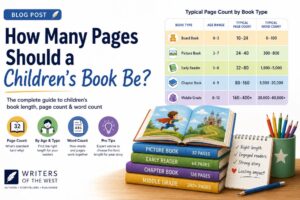
Picture books are children’s books in which illustration and text work together to tell the story, typically thirty-two pages and under about a thousand words, written for reading aloud to children from infancy to around age seven.
Early Readers
Early readers are children’s books designed for children learning to read independently, using controlled vocabulary, short sentences and heavy illustration support, usually for ages five to seven.
Chapter Books
Chapter books are children’s books divided into short chapters for newly independent readers of roughly seven to ten, longer than early readers with reduced illustration and a single continuous story.
Middle Grade Fiction
Middle grade fiction is fiction written for readers of roughly eight to twelve, typically 30,000 to 50,000 words, with protagonists near the top of that age range and content appropriate to it. It is an audience category and can contain any story genre.
Children’s Nonfiction
Children’s nonfiction is factual writing for young readers, covering science, history, biography and how-to subjects, with information density and vocabulary calibrated to reading level.
Young Adult Books
Young adult (YA) is primarily an audience category rather than a story genre. A YA novel can also be fantasy, romance, mystery, horror, science fiction or historical fiction, and the label describes who the book is published for rather than what kind of story it tells.
The convention is a readership of roughly twelve to eighteen, protagonists usually aged fourteen to eighteen, and a focus on experiences of that period such as identity, first relationships, autonomy and the pressures of school and family. Adults make up a substantial share of the actual readership, which publishers plan for rather than treat as unusual.
YA Contemporary
YA contemporary is young adult fiction set in the present day without speculative elements, drawing its material from adolescent social life, family, school, identity and relationships.
YA Romance
YA romance is young adult fiction in which a developing romantic relationship is the central plot, with the emotional intensity of early relationships as its subject. Content conventions on sexual material are more restrictive than in adult romance.
YA Fantasy
YA fantasy is young adult fiction containing magic, invented worlds or supernatural elements, frequently structured around a young protagonist’s discovery of power or a hidden inheritance.
YA Thriller
YA thriller is young adult fiction driven by danger, secrecy and escalating stakes, usually with a protagonist who cannot rely on adult authority to resolve the threat.
YA Historical Fiction
YA historical fiction is young adult fiction set in a researched past period, examining that era through the experience of an adolescent protagonist navigating its constraints.
Nonfiction Genres
Nonfiction categories work differently from fiction genres. Most are subject classifications rather than story genres, describing what a book is about rather than what conventions it follows. A few, such as memoir and biography, are genuine genres with recognizable formal expectations.
Biography
Biography is nonfiction that documents the life of a real person, written by someone other than the subject and based on research into records, testimony and primary sources. It carries an expectation of factual accuracy and disclosed sourcing.
Biography subgenres are named for the subject’s field or for the aspect of the life the book emphasizes. A biography may cover a full lifespan or concentrate on a defining period, and both are standard.
Often confused with: autobiography. A biography is written about someone by another person. An autobiography is written by the subject about themselves.
Historical Biography
Historical biography is biography of a figure from the past, reconstructed from archival records, correspondence and contemporary accounts rather than from living testimony. It carries the research demands of history writing.
Political Biography
Political biography is biography of a politician, statesperson or political figure, examining their career, decisions and influence alongside the political conditions they operated in.
Literary Biography
Literary biography is biography of a writer, examining the relationship between their life and their work. It typically combines life narrative with critical reading of the writing.
Celebrity Biography
Celebrity biography is biography of a public figure from entertainment, sport or popular culture, written for a general readership and usually organized around fame, career and public incident.
Intellectual Biography
Intellectual biography is biography focused on the development of a subject’s ideas rather than the events of their life, tracing how a thinker’s positions formed and changed. The life supplies context for the thought.
Autobiography
Autobiography is nonfiction in which a person tells the story of their own life, written by the subject and generally covering a substantial span from early life onward. It is expected to be factual, and the coverage is broad rather than thematic.
Autobiography subgenres are distinguished by which portion or dimension of the life is treated as the organizing subject.
Often confused with: memoir. Autobiography attempts a full and chronological account of a life. Memoir selects a theme, period or experience and treats only what serves it, with more latitude for reflection and narrative shaping.
Full-Life Autobiography
Full-life autobiography is autobiography covering the subject’s life from childhood to the time of writing, structured chronologically and aiming at completeness rather than selection.
Professional Autobiography
Professional autobiography is autobiography organized around the subject’s career and working life, treating personal material mainly where it bears on the professional story.
Spiritual Autobiography
Spiritual autobiography is autobiography structured around the development of the author’s religious or spiritual life, typically centered on conversion, doubt, practice or vocation.
Political Autobiography
Political autobiography is autobiography by a political figure, giving their own account of their career, decisions and the events they participated in. It is understood to be a partisan source rather than a neutral record.
Memoir
Memoir is nonfiction in which the author writes about their own life selectively, organizing the book around a specific theme, period, relationship or experience rather than attempting a complete life story. It permits literary shaping and reflection while remaining factual.
Memoir subgenres are named for the experience at the book’s center. The genre’s conventions allow scene, dialogue and structure borrowed from fiction, with the understanding that events happened as described to the best of the author’s recollection.
Personal Memoir
Personal memoir is memoir centered on the author’s private life, relationships and inner development, without a specialized subject frame such as illness, travel or war.
Travel Memoir
Travel memoir is memoir built around a journey, in which the places visited and the author’s response to them structure the book. It differs from a travel guide by being personal rather than practical.
Grief Memoir
Grief memoir is memoir centered on bereavement and its aftermath, examining loss, mourning and the process of continuing afterward.
Recovery Memoir
Recovery memoir is memoir centered on the author’s experience of addiction or compulsion and the process of recovery, usually structured around the descent and the work of coming back.
Spiritual Memoir
Spiritual memoir is memoir organized around the author’s religious or spiritual experience, including conversion, loss of faith, practice or a period of searching.
Illness Memoir
Illness memoir is memoir centered on the author’s experience of serious illness, disability or medical treatment, and its effect on identity, relationships and daily life. Books written by clinicians about patients are usually classified as medical narrative rather than memoir.
Food Memoir
Food memoir is memoir in which cooking, eating and food culture organize the author’s life story, often combining narrative with recipes.
Military Memoir
Military memoir is memoir by a service member about their experience of training, deployment, combat or return to civilian life, told from personal perspective rather than as military history.
Self-Help and Personal Development
Self-help and personal development is nonfiction that offers readers methods for improving some aspect of their own lives, combining explanation with actionable guidance. The reader is positioned as someone intending to change something rather than to learn about it.
The category’s credibility rests heavily on the author’s standing, and its subgenres are named for the area of life being addressed. Books here overlap substantially with psychology and business, and the distinction is usually whether the book is primarily explanatory or primarily prescriptive.
Productivity
Productivity books are self-help books offering systems and methods for managing time, attention, tasks and workload more effectively.
Habit and Behavior Change
Habit and behavior change books are self-help books focused on how people form, break and sustain routines, usually drawing on behavioral research to offer practical methods.
Relationship Self-Help
Relationship self-help is self-help addressing romantic partnerships, friendships or family dynamics, offering frameworks for communication, conflict and connection.
Confidence and Self-Esteem
Confidence and self-esteem books are self-help books addressing how readers regard themselves, covering self-worth, assertiveness, social anxiety and internal criticism.
Career Development
Career development books are self-help books focused on professional progression, covering job searching, negotiation, skill building, career change and workplace advancement.
Motivational Books
Motivational books are self-help books written primarily to change the reader’s outlook and energy rather than to supply a method, relying on argument, example and encouragement.
Business and Entrepreneurship
Business and entrepreneurship is nonfiction addressing how organizations are built, run and grown, written for practitioners rather than academics. It covers strategy, operations, people and commerce.
Subgenres correspond to business functions and to the reader’s position in an organization. Many titles combine narrative case studies with a framework the reader is meant to apply.
Entrepreneurship
Entrepreneurship books address starting and growing a new venture, covering opportunity, funding, product development, early hiring and the risks specific to founding a business.
Leadership
Leadership books address how individuals direct and influence others, covering decision-making, vision, communication, trust and the responsibilities of senior positions.
Management
Management books address the operational work of running teams and processes, covering delegation, performance, hiring, meetings and organizational systems. The distinction from leadership is one of scope and daily practice.
Sales
Sales books address the process of selling, covering prospecting, negotiation, objection handling, relationship building and the structure of a sales organization.
Marketing
Marketing books address how products and services find and persuade customers, covering positioning, brand, channels, pricing and measurement.
Workplace and Organizational Books
Workplace and organizational books examine how institutions function as social systems, covering culture, structure, incentives, politics and change. They tend to be analytical rather than instructional.
Personal Finance and Investing
Personal finance and investing is nonfiction addressing how individuals manage, protect and grow their own money, written for non-professional readers making decisions about their own circumstances.
Subgenres are named for the financial activity or life stage addressed. Because the subject is regulated in many jurisdictions, credibility depends heavily on author credentials and clear disclosure.
Money Management
Money management books address budgeting, saving, spending and debt, focused on the mechanics of household finances rather than on growing capital.
Investing
Investing books address putting capital into assets to generate returns, covering markets, risk, asset allocation, and specific instruments such as stocks, bonds and funds.
Retirement Planning
Retirement planning books address preparing financially for the end of working life, covering pensions, withdrawal strategy, tax treatment and the timing of retirement decisions.
Real Estate Investing
Real estate investing books address acquiring and operating property for income or appreciation, covering financing, valuation, rental management and market analysis.
Financial Independence
Financial independence books address building enough assets to make paid work optional, combining aggressive saving, investment strategy and lifestyle design. The FIRE movement is the best-known expression of the category.
History
History is nonfiction that examines and interprets the documented past, based on primary sources, archival research and scholarly evidence. It differs from historical fiction in making claims about what actually happened and being answerable to evidence for them.
History subgenres are defined either by subject area or by scale of focus, from global synthesis down to a single street or object. Popular history written for general readers and academic history written for specialists follow different conventions on citation, length and prose style, though the underlying research standards overlap.
World History
World history is history examining events, patterns and connections across multiple regions or civilizations, rather than within a single nation. It emphasizes exchange, comparison and large-scale causation.
Military History
Military history is history focused on armed conflict, covering campaigns, battles, strategy, logistics, weapons and the institutions that wage war.
Social History
Social history is history examining the lives, conditions and experiences of ordinary people rather than rulers and elites, covering work, family, class, health and daily life.
Cultural History
Cultural history is history examining the beliefs, practices, art, language and shared meanings of a society, treating culture itself as the subject rather than the background.
Political History
Political history is history focused on governments, movements, elections, legislation and the exercise of power, tracing how political authority was contested and used.
Economic History
Economic history is history examining production, trade, labor, money and markets, using economic evidence to explain change over time.
Local History
Local history is history focused on a specific town, region or community, drawing on municipal records, local archives and oral testimony. Scope rather than subject defines it.
Microhistory
Microhistory is history that examines a single small episode, individual or object in intensive detail in order to illuminate the wider society around it. The narrow focus is a method rather than a limitation.
True Crime
True crime is nonfiction that investigates and narrates real criminal cases, drawing on court records, police files, interviews and reporting. It combines factual documentation with narrative techniques borrowed from fiction.
Subgenres are named for the kind of crime or the investigative angle taken. The category carries particular ethical obligations regarding victims, surviving families and unproven allegations, and reputable publishing practice treats those as constraints on what can be written.
Murder and Homicide
Murder and homicide true crime is true crime covering killings, from individual cases through to serial offenses, following the crime, the investigation and the legal outcome.
Organized Crime
Organized crime nonfiction is true crime covering criminal organizations such as syndicates, cartels and gangs, examining their structure, operations and relationship with legitimate institutions.
Financial Crime and Fraud
Financial crime and fraud is true crime covering embezzlement, fraud schemes, corporate malfeasance and financial deception, usually reconstructing how a scheme worked and how it collapsed.
Historical True Crime
Historical true crime is true crime covering cases from the distant past, reconstructed from archival records where witnesses are no longer available and forensic evidence may be absent or unreliable.
Forensic True Crime
Forensic true crime is true crime centered on the scientific and technical methods used to solve cases, covering pathology, DNA analysis, ballistics and evidence interpretation.
Religion and Spirituality
Religion and spirituality is nonfiction addressing religious belief, practice, texts, institutions and spiritual experience. It includes books written from inside a tradition for believers and books written about traditions for general or scholarly readers.
Subgenres are distinguished by whether the book is devotional, analytical, historical or comparative, and by whether it addresses one tradition or several.
Theology
Theology is nonfiction that systematically examines religious doctrine and belief, reasoning about the nature of the divine, scripture and faith from within a tradition’s intellectual framework.
Devotional Books
Devotional books are religious nonfiction written to support personal practice, typically structured as daily readings, prayers, meditations or reflections for believers.
Comparative Religion
Comparative religion is nonfiction that examines two or more religious traditions alongside each other, analyzing their beliefs, practices and histories without advocating for any of them.
Religious History
Religious history is nonfiction examining the historical development of religions, their institutions, schisms, expansion and relationship with political power.
Scripture Commentary
Scripture commentary is nonfiction providing systematic exposition of a sacred text, working through it passage by passage with linguistic, historical and theological analysis.
Mysticism
Mysticism is nonfiction addressing direct experience of the divine or ultimate reality, covering contemplative practice, mystical writing and the traditions that cultivate such experience.
Philosophy
Philosophy is nonfiction that examines fundamental questions about existence, knowledge, values, reason and mind through argument rather than empirical investigation. Its method is analysis and justification rather than evidence-gathering.
Subgenres correspond to the discipline’s established branches. Philosophy for general readers and academic philosophy differ substantially in technical vocabulary and assumed background, though they address the same questions.
Ethics
Ethics is the branch of philosophy examining what makes actions right or wrong and what constitutes a good life, covering moral theory and applied questions in medicine, business and law.
Political Philosophy
Political philosophy is the branch of philosophy examining the justification of political authority, covering justice, liberty, rights, equality and the legitimacy of states.
Philosophy of Mind
Philosophy of mind is the branch of philosophy examining consciousness, mental states and the relationship between mind and body, including personal identity and intentionality.
Epistemology
Epistemology is the branch of philosophy examining knowledge itself, addressing what can be known, what justifies belief, and the nature and limits of certainty.
Metaphysics
Metaphysics is the branch of philosophy examining the fundamental nature of reality, covering existence, causation, time, objects, properties and possibility.
Existentialism
Existentialism is a philosophical tradition centered on individual existence, freedom, choice and the construction of meaning in a universe that supplies none. It is a school of thought rather than a branch of the discipline.
Psychology
Psychology is nonfiction addressing human thought, emotion and behavior, based on empirical research into how the mind works. Books range from research-grounded popular writing to academic texts.
Subgenres correspond to the research areas within the discipline. Psychology overlaps with self-help, and the working distinction is that psychology explains what is known while self-help prescribes what to do.
Popular Psychology
Popular psychology is psychology written for general readers, translating research findings into accessible explanation. Quality varies widely, and the reliability of a title depends on how carefully it represents the underlying evidence.
Behavioral Psychology
Behavioral psychology is psychology examining observable behavior and how it is shaped by conditioning, reinforcement and environment.
Cognitive Psychology
Cognitive psychology is psychology examining internal mental processes including memory, attention, perception, language and reasoning.
Social Psychology
Social psychology is psychology examining how people think, feel and behave in the presence of others, covering influence, conformity, group dynamics, prejudice and identity.
Relationship Psychology
Relationship psychology is psychology examining attachment, intimacy, conflict and communication between partners, family members and close friends.
Science
Science is nonfiction that explains the natural world through the findings and methods of empirical research. It ranges from books explaining established knowledge to books reporting current research and its implications.
Subgenres correspond to scientific disciplines, with popular science functioning as a separate category defined by intended readership rather than subject.
Popular Science
Popular science is science writing for non-specialist readers, explaining research and concepts without requiring technical training. It is defined by audience rather than by field.
Physics
Physics books address matter, energy, force, space and time, covering areas from mechanics and thermodynamics through to quantum theory and cosmology.
Biology
Biology books address living organisms and their systems, covering evolution, genetics, ecology, cell biology, neuroscience and the diversity of life.
Astronomy
Astronomy books address celestial objects and the universe, covering stars, planets, galaxies, cosmology and the instruments and methods used to observe them.
Environmental Science
Environmental science books address the natural environment and human impact on it, covering ecosystems, climate, biodiversity, pollution and conservation.
Mathematics
Mathematics books address number, structure, quantity and logical relation, ranging from popular accounts of mathematical ideas to instructional and technical texts.
Technology
Technology is nonfiction addressing applied tools, systems and engineering, including how technologies work, how they are built and what they do to societies. It overlaps with science, business and social commentary.
Subgenres are named for the technical field or for the technology’s social dimension.
Computing
Computing books address computers and software, covering programming, systems, algorithms, data and the practical work of building software.
Artificial Intelligence
Artificial intelligence books address machine learning systems and their capabilities, covering technical foundations, applications and the questions raised by increasingly capable models.
Engineering
Engineering books address the design and construction of physical systems and structures, covering mechanical, civil, electrical and other engineering disciplines.
Cybersecurity
Cybersecurity books address the protection of computer systems and data, covering threats, attacks, defense, cryptography and the human factors involved in security.
Technology and Society
Technology and society books examine how technologies reshape work, politics, privacy, relationships and culture. The analysis is social and ethical rather than technical.
Health and Wellness
Health and wellness is nonfiction addressing physical and mental health, offering explanation, guidance or both for readers managing their own wellbeing. Publishing standards for the category depend heavily on author credentials, and reputable titles distinguish clearly between established evidence and personal approach.
Subgenres are named for the aspect of health being addressed. Books here overlap with self-help, medicine and food writing.
Fitness
Fitness books address physical exercise and training, covering strength, endurance, mobility, programming and the principles behind physical conditioning.
Nutrition
Nutrition books address food and its effects on the body, covering nutrients, dietary patterns, metabolism and the evidence behind specific eating approaches.
Mental Wellness
Mental wellness books address psychological health and its maintenance, covering stress, anxiety, mood, resilience and practices such as therapy-informed techniques or meditation.
Medical and Health Guides
Medical and health guides are reference nonfiction explaining specific conditions, treatments and medical decisions for patients and carers, usually written or reviewed by clinicians.
Sleep
Sleep books address sleep biology, disorders and improvement, covering circadian rhythm, sleep architecture and the practical management of insufficient or disrupted sleep.
Healthy Aging
Healthy aging books address maintaining physical and cognitive function through later life, covering exercise, nutrition, cognition, social connection and the biology of aging.
Travel Writing
Travel writing is nonfiction about places and journeys, ranging from practical guides that tell readers how to visit somewhere to literary narratives that use travel as a subject in itself. The two ends of that range have almost nothing in common structurally, which is why the subgenres below matter.
Subgenres are distinguished by whether the book is primarily useful or primarily narrative, and by what aspect of a place it treats as its subject.
Travel Guides
Travel guides are practical travel books providing the information needed to visit a destination, covering transport, accommodation, sights, costs and logistics. They are reference works with a defined shelf life.
Travel Narratives
Travel narratives are travel books structured as a story of a journey, in which the author’s experience and observations carry the book. They differ from travel memoir in centering the places encountered rather than the author’s life.
Adventure Travel
Adventure travel writing covers journeys involving physical challenge or risk, such as expeditions, long-distance walks, climbs or crossings, where the difficulty is central to the account.
Destination Guides
Destination guides are travel books devoted to a single city, country or region in depth, offering fuller coverage of one place than a general guide can provide.
Cultural Travel Writing
Cultural travel writing examines a place through its people, customs, history and social life, using travel as a method of cultural inquiry rather than as an itinerary.
Cookbooks and Food Writing
Cookbooks and food writing is nonfiction about food, covering recipe collections intended for use in the kitchen and narrative writing about cuisine, ingredients and food culture. Recipe books and food narrative have different structures and are commissioned differently.
Subgenres are named for the cooking approach, the cuisine, the dietary framework or the analytical angle taken.
General Cookbooks
General cookbooks are recipe collections covering a broad range of dishes and techniques without restriction to one cuisine, method or dietary framework.
Baking Books
Baking books are cookbooks devoted to baked goods, covering bread, pastry, cakes and the techniques and measurements that baking requires. Precision of instruction matters more than in general cooking.
Regional Cuisine
Regional cuisine cookbooks are recipe collections devoted to the food of a specific country, region or culinary tradition, usually including cultural and historical context alongside the recipes.
Diet-Specific Cookbooks
Diet-specific cookbooks are recipe collections built around a defined dietary framework such as vegetarian, vegan, gluten-free or low-carbohydrate eating.
Culinary History
Culinary history is food writing that examines how cuisines, ingredients and eating practices developed over time, treating food as a subject of historical inquiry.
Essays and Criticism
Essays and criticism is nonfiction consisting of shorter prose pieces that argue, reflect or analyze, usually collected into a single volume. The essay’s defining feature is the visible presence of a thinking voice working through a subject.
Subgenres are distinguished by whether the essay’s material is personal, literary, cultural or political, and by whether its primary mode is reflection or judgment.
Personal Essays
Personal essays are essays drawing on the author’s own experience to explore an idea, using autobiography as material for argument or reflection rather than as the subject itself.
Literary Essays
Literary essays are essays examining books, writers and literary form, combining close reading with argument about how and why writing works.
Cultural Criticism
Cultural criticism is nonfiction analyzing art, media, entertainment and popular culture, examining what cultural products mean and what they reveal about the societies producing them.
Social Criticism
Social criticism is nonfiction analyzing social conditions, institutions and norms, arguing about how a society is organized and what is wrong with it.
Humor Essays
Humor essays are essays written primarily to amuse, using comic observation, exaggeration and voice while retaining the essay’s reflective structure.
Politics and Current Affairs
Politics and current affairs is nonfiction addressing contemporary political events, governance and public issues, written to inform or to argue a position on matters currently in dispute. Its shelf life is shorter than history’s and its claims are more contested.
Subgenres are distinguished by whether the book analyzes, advocates, reports or prescribes.
Political Analysis
Political analysis is nonfiction examining political systems, parties, elections and behavior, explaining how political outcomes are produced rather than arguing for a preferred one.
Public Policy
Public policy books examine specific areas of government action such as healthcare, education, housing or taxation, assessing how policies work and what alternatives exist.
Geopolitics
Geopolitics books examine relations between states and the influence of geography, resources, alliances and power on international affairs.
Social Commentary
Social commentary is nonfiction offering an argued perspective on contemporary social conditions and debates, written to persuade rather than to survey.
Investigative Current Affairs
Investigative current affairs is nonfiction based on original reporting into contemporary institutions, industries or events, uncovering information not otherwise on the public record.
Education and Reference
Education and reference is nonfiction produced to instruct or to be consulted rather than read continuously. Its structure is organized for retrieval and study, and it is commissioned, formatted and updated differently from narrative nonfiction.
Subgenres correspond to the function the book performs for its reader.
Textbooks
Textbooks are instructional books structured to teach a subject systematically over a course of study, with defined learning progression, exercises and assessment material.
Study Guides
Study guides are books supporting preparation for a specific course or examination, condensing material, providing practice questions and identifying what is likely to be assessed.
Handbooks
Handbooks are practical reference books compiling the working knowledge of a field into a consultable format for practitioners.
Encyclopedias
Encyclopedias are reference works providing summary entries on a broad range of subjects, organized alphabetically or thematically for lookup rather than continuous reading.
Dictionaries
Dictionaries are reference works listing words with their meanings, pronunciation, etymology and usage, arranged for retrieval.
Instructional Manuals
Instructional manuals are procedural reference books explaining how to operate, build, maintain or repair something, organized around tasks and sequences.
Art, Photography and Design
Art, photography and design is nonfiction about visual and applied arts, in which images are usually central to the book rather than illustrative. Production values, paper stock and reproduction quality are part of what the category is judged on.
Subgenres correspond to the visual discipline addressed, and books range from monographs and collections through to critical history and practical instruction.
Art Books
Art books cover painting, sculpture and fine art, including monographs on individual artists, movement surveys, exhibition catalogues and art history.
Photography Books
Photography books cover photographic work and practice, including collections of a photographer’s images, thematic surveys and technical instruction.
Architecture
Architecture books cover the design of buildings and built environments, including studies of architects, movements, individual structures and architectural theory.
Interior Design
Interior design books cover the arrangement and decoration of interior spaces, including style surveys, practical guidance and portfolios of completed work.
Fashion
Fashion books cover clothing design and dress, including designer monographs, fashion history, style guidance and photographic collections.
Graphic Design
Graphic design books cover visual communication including typography, layout, branding and illustration, ranging from practical instruction to critical and historical study.
Sports and Recreation
Sports and recreation is nonfiction about athletic competition, physical pastimes and leisure activities, covering both the culture of sport and instruction in how to play. It overlaps with biography, history and health.
Subgenres are distinguished by whether the book documents, analyzes, instructs or serves a hobby.
Sports History
Sports history is nonfiction documenting the development of sports, teams, competitions and eras, using the same research standards as history writing.
Coaching Books
Coaching books address how to train and lead athletes and teams, covering tactics, development, psychology and the management of competitive programs.
Outdoor Recreation
Outdoor recreation books address activities in natural environments such as hiking, climbing, fishing, cycling and camping, combining instruction with route and location information.
Games and Hobbies
Games and hobbies books address recreational pursuits including board games, chess, card games, collecting and craft activities, usually instructional in structure.
Sports Instruction
Sports instruction books teach how to play a specific sport, covering technique, rules, practice and improvement for the participant rather than the coach.
Parenting and Family
Parenting and family is nonfiction addressing raising children and managing family relationships, combining practical guidance with explanation of child development and family dynamics. Credibility rests substantially on clinical or research credentials.
Subgenres are named for the stage of family life or the relationship being addressed.
Pregnancy and Childbirth
Pregnancy and childbirth books address conception, pregnancy, labor and the immediate postnatal period, covering physical changes, medical care and preparation.
Parenting Guides
Parenting guides address the practical work of raising children, covering discipline, routines, feeding, sleep, education and common difficulties at each age.
Child Development
Child development books explain how children grow cognitively, emotionally, socially and physically, providing the research background that parenting guidance draws on.
Marriage and Family Relationships
Marriage and family relationships books address adult relationships within families, covering partnership, communication, conflict, separation and extended family dynamics.
Family Life
Family life books address the organization and culture of family households, covering routines, traditions, shared time, finances and the management of daily life together.
Hybrid and Crossover Genres
Hybrid genres are categories that combine the conventions of two parent genres so that both are load-bearing, rather than one supporting the other. They are usually market labels created by booksellers and readers before publishers adopt them.
The test for a genuine hybrid is whether removing either parent genre would break the book. Romantasy needs both its fantasy plot and its romance arc; a fantasy novel with a love interest does not become romantasy. The same logic applies to romantic suspense, historical mystery, weird Western and science-fiction romance.
Hybrids are listed once in this guide, under whichever parent genre dominates in practice, rather than counted twice. Romantasy appears under Fantasy, romantic suspense under Romance, historical mystery under Mystery, and weird Western and Western noir under Western Fiction.
How to Identify Your Book’s Genre
To identify your book’s genre, work out what a reader would be most disappointed to lose if you removed it. That element is your primary genre, and everything else is a subplot, a setting or a tone.
The practical version, in order:
| Question | What it tells you |
|---|---|
| What is the central plot promise? | The parent genre. A solved puzzle points to mystery, a couple’s resolution to romance, escalating danger to thriller |
| Where and when is it set? | Often the subgenre. Contemporary, historical, secondary world, modern city |
| What is the tone? | Frequently the subgenre too. Cozy, dark, comic, grim |
| Who is it written for? | The audience category. Adult, young adult, middle grade, children |
| What format is it? | Whether format labels apply. Novel, graphic novel, picture book, short story collection |
| Which shelf would a bookseller reach for? | The commercial answer, which is what matters for positioning |
Two practical notes. Retailers such as Amazon and the BISAC subject codes used across the North American trade will each have specific category names, and those exact terms are what you should match when publishing rather than the general genre name. And where a book genuinely sits between two categories, most authors are better served choosing the one with the closest reader expectation rather than inventing a hybrid label, because readers browse by expectation.
If you are still deciding what kind of book you are writing, our guides to outlining a novel and building a book outline can help clarify the shape before you commit to a category.
Which Book Genres Are Most Popular?
Romance, mystery and thriller, fantasy, and self-help consistently rank among the highest-selling book categories, though rankings shift by year, format and market. Audiobook, ebook and print sales do not produce the same order, and category data from retailers is not directly comparable to industry-wide figures.
Popularity is a separate question from classification, and this guide covers the latter. For sales data, demand and market trends, see our guide to [BESTSELLING-GENRES-URL].
FAQ
What are the main book genres? The main fiction genres are literary fiction, romance, mystery, crime, thriller, fantasy, science fiction, horror, historical fiction, adventure and Western. The main nonfiction categories include biography, autobiography, memoir, self-help, business, history, true crime, religion, philosophy, psychology, science and health.
How many book genres are there? There is no fixed number. Publishers, retailers and libraries each use their own classification systems, and new market categories such as romantasy and cozy fantasy appear as reading habits change. Any list of book genres reflects current publishing practice rather than a permanent taxonomy.
What is the difference between a genre and a subgenre? A genre is a broad parent category defined by its central conventions, and a subgenre is a narrower category within it defined by an additional feature such as setting, tone or era. Fantasy is a genre; urban fantasy is a subgenre of it.
Is young adult a genre? No. Young adult is an audience category describing who a book is published for, not what kind of story it tells. A young adult book can be fantasy, romance, mystery, horror or any other genre.
What is the difference between a memoir and an autobiography? An autobiography attempts a complete, generally chronological account of the author’s life. A memoir selects a theme, period or experience and treats only what serves it, with more latitude for reflection and narrative shaping. Both are written by the subject.
What is the difference between mystery and thriller? Mystery is structured around uncovering a withheld answer through investigation. Thriller is structured around escalating danger and tension, and the reader often knows the threat from the start. A book can contain both, and publishers classify it by whichever drives the plot.
Can a book belong to more than one genre? Yes. Most books do, and cross-listing is standard practice in retail categories. Publishers still designate one primary genre for positioning, cover design and shelving, because readers browse by a single expectation even when a book satisfies several.
How do I choose a genre for my book? Identify the central plot promise, which is the element a reader would most object to losing, and use that as the primary genre. Setting and tone usually determine the subgenre, audience determines the market category, and the specific retailer or BISAC category name is what you match when you publish.
This reference reflects classification as it is used in current trade publishing practice. Where a category is disputed, recently coined, or functions as an audience or format label rather than a story genre, that is noted in the entry. If you are working on a book and want editorial help placing it correctly, our fiction ghostwriting, fiction editing and fantasy writing teams work across the categories listed here. For romance specifically, our romance novel outline guide covers the genre’s structural conventions in more depth.
About the Author
Senior Editor, Writers of the West
Francis Vincent is a best-selling American author and senior editor at Writers of the West. He holds both a B.A. and M.A. in English Literature, with graduate work at the University of Colorado Boulder. His editorial specialization spans productivity, habits, line editing, and dialogue refinement. He focuses on clarity, flow, and practical structure — helping authors translate ideas into polished, publishing-ready manuscripts while preserving their voice and intent.
writersofthewest.net · Professional Ghostwriting Services, Book Editing & Publishing Guidance