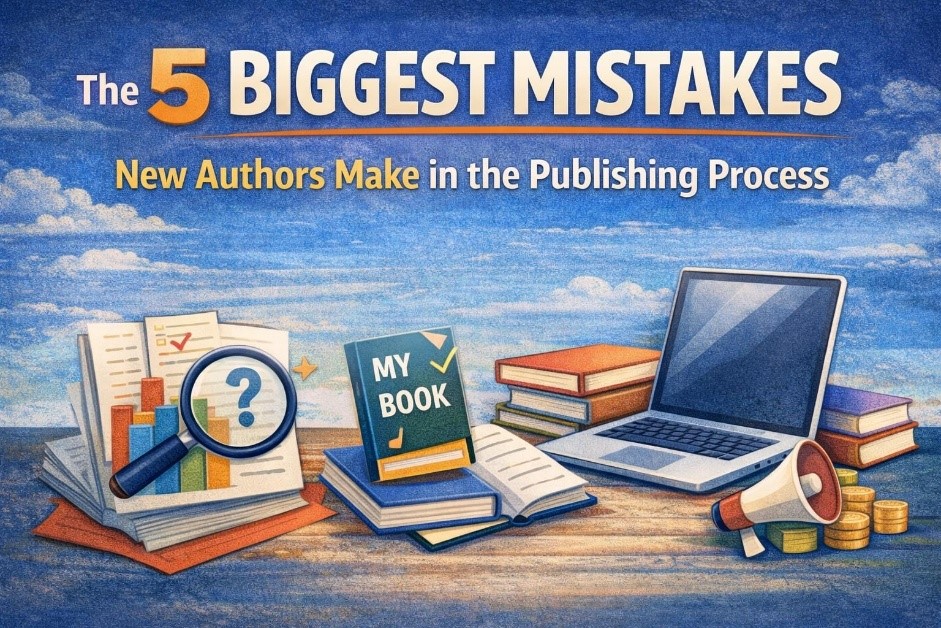
New authors often fail at publishing. Not because of talent, but because of avoidable mistakes. Learn the 5 biggest publishing errors, why they hurt, and how to fix them before launching your book.
Introduction
Publishing a first book is often framed as a finish line. In reality, it is a transition from creative work into decision making that carries real consequences. This is where many new author mistakes quietly take shape. The writing may be done, but the outcomes now depend on strategy, clarity, and restraint.
The problem is not a lack of effort or passion. It is the assumption that publishing will sort itself out. New authors make rushed choices around editing, positioning, pricing, and promotion, sometimes placing trust in top book marketing companies without understanding how visibility or discoverability actually works. When the book launches and results fall flat, the disappointment feels personal, even though the issue was structural.
This article is designed to bring a clear-headed perspective to that moment. You will learn the five mistakes that most consistently undermine first time book launches, along with practical ways to avoid them before your book enters the market.
Before the Mistakes: A Quick Map of the Publishing Process
Most publishing problems do not come from a single bad decision. They come from not understanding the sequence of decisions at all. When you do not know what comes next, everything feels equally urgent, and that is when shortcuts start to look reasonable.
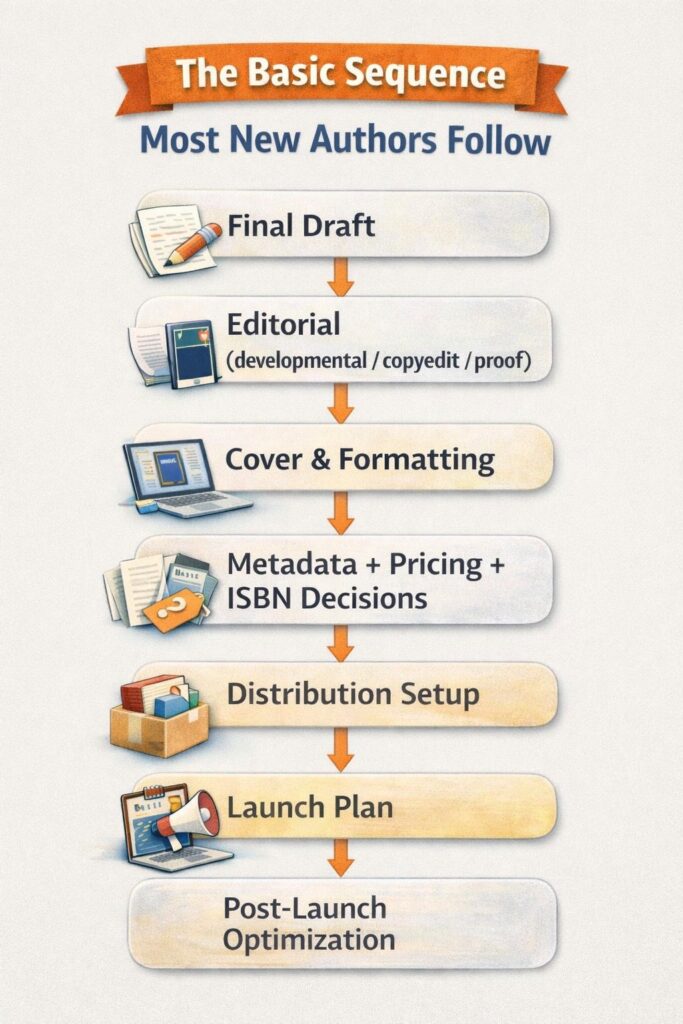
Below is the core publishing sequence most first-time authors move through. Each step builds on the one before it. Skipping or rushing any of them creates problems that are hard to fix later.
Final Draft
This is the version of the manuscript you stop revising on your own. It does not mean the book is perfect. It means you have taken it as far as you can without outside perspective. At this stage, your job is to stop tinkering and prepare the manuscript for professional feedback.
Editorial Work
Editing is not one thing. It is a series of passes that solve different problems.
Developmental or structural editing looks at big-picture issues like pacing, clarity, argument flow, and story logic. Copyediting focuses on sentence-level clarity, consistency, and correctness. Proofreading is the final quality check after everything else is complete. Doing these out of order almost always wastes time and money.
Cover Design and Interior Formatting
This is where your book becomes a product. The cover communicates genre, tone, and quality before a reader reads a single word. Interior formatting affects readability across print and digital formats. Both influence trust, even if readers cannot articulate why.
Metadata, Pricing, and ISBN Decisions
Metadata determines how your book is found. Categories, keywords, subtitles, and descriptions all work together to signal who the book is for. Pricing affects both perception and conversion. ISBN decisions influence ownership, distribution flexibility, and imprint control.
Distribution Setup
Distribution is where and how your book becomes available. This includes choosing platforms, formats, territories, and exclusivity options. Each choice impacts reach, royalties, and future marketing options.
Launch Plan
A launch is not a single day. It is a coordinated window of visibility. This step includes review strategies, promotional timing, email outreach, and any advertising efforts. Without a plan, even a well-made book can launch quietly.
Post-Launch Optimization
Publishing does not end on release day. Post-launch work involves tracking performance, adjusting metadata, testing pricing, refining ads, and improving conversion elements. Small changes made here often outperform big launch-week efforts.
When you see the process laid out this way, publishing stops feeling overwhelming. It becomes a series of manageable, intentional steps.
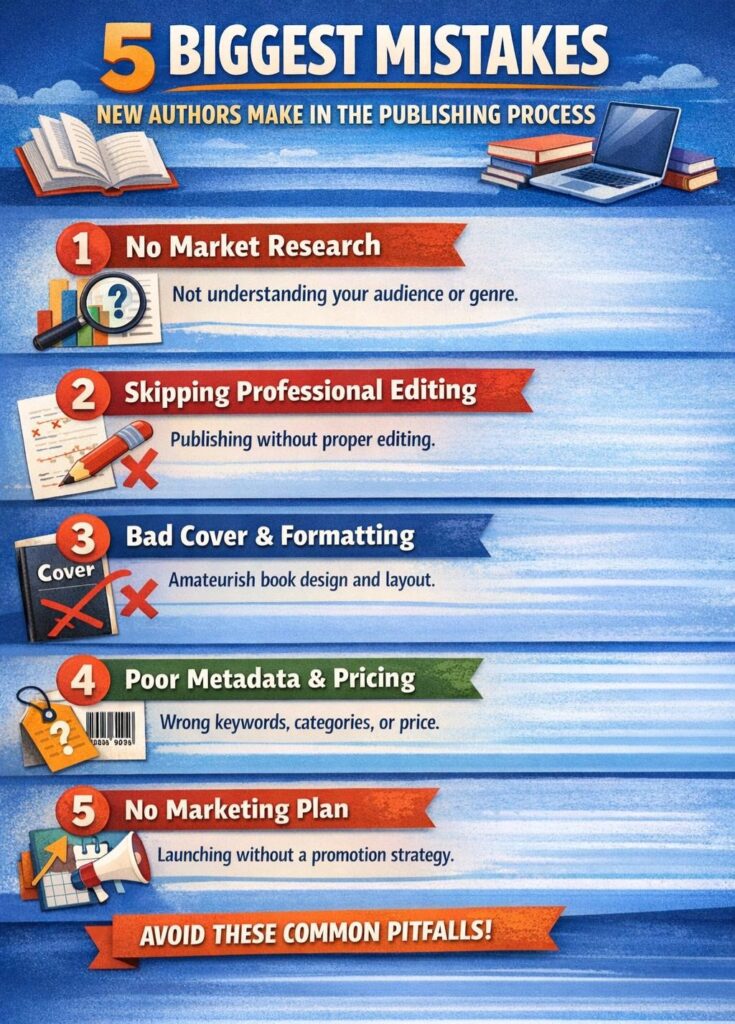
Mistake 1: Publishing Without Real Market Research (Or a Clear Reader Promise)
What It Looks Like
The book is described as being for everyone. Categories and keywords are chosen late or copied from another title without much thought. The blurb sounds pleasant but vague, and it could apply to dozens of other books.
Comparable titles are not studied in any real depth. Covers, pricing, length, tone, and reader expectations are guessed instead of observed. The result is a book that exists, but does not clearly belong anywhere.
Why It Hurts
Weak Positioning From the Start
When a book is not clearly positioned, every downstream decision becomes harder. Cover designers lack direction. Blurbs struggle to convert. Advertising platforms cannot target effectively. Even readers who might love the book hesitate because they are not sure what they are getting.
Confusion at the Point of Sale
Readers make decisions quickly. If they cannot understand the genre, tone, or promise of the book within a few seconds, they move on. Confusion is not neutral. It actively suppresses sales.
Launch Efforts Lose Impact
Poor positioning undermines book launch planning. Promotions, reviews, and ads rely on clarity. Without a clear reader promise, visibility does not translate into interest.
How to Fix It
Define One Specific Reader
Start by choosing one ideal reader, not a demographic spreadsheet. Focus on genre, emotional tone, core problem or desire, and the payoff they are seeking. This reader becomes the filter for every decision that follows.
Study Comparable Titles Intentionally
Build a list of ten to twenty comparable books. Look at their covers, subtitles, pricing, length, and reviews. Pay attention to patterns. Those patterns represent reader expectations, not arbitrary trends.
Write a Clear One-Sentence Promise
Condense your book into a single sentence that states who it is for and what they will get. This promise should guide your cover design, description copy, and marketing language.
Mini Checklist
- Ten comparable titles identified and analyzed
- Three to five reader expectations pulled directly from reviews
- One-sentence reader promise written and applied consistently
Mistake 2: Skipping Professional Editing (Or Doing It in the Wrong Order)
This is one of the most common new author mistakes, and it often comes from trying to be practical. Editing feels expensive. Feedback from friends feels reassuring. The manuscript feels close enough.
Close enough is rarely enough.
What It Looks Like
You rely on beta readers or well-meaning friends instead of professional editors. You move straight to proofreading because grammar feels like the obvious problem. The book is published with uneven pacing, unclear arguments, or scenes that drag without purpose.
Nothing is technically broken, but the reading experience feels rough.
Why It Hurts
It Undermines Reader Trust
Readers may not know how to name what feels wrong, but they feel it. Confusing structure, repetitive sections, or weak transitions signal carelessness. Once trust is broken, readers stop recommending the book.
It Locks in Structural Problems
Sentence-level polish cannot fix big-picture issues. If the story arc, logic, or flow is off, proofreading only makes the problems cleaner, not smaller. At that point, revisions become expensive and emotionally draining.
It Damages Long-Term Credibility
A poorly edited first book follows you. Future readers check reviews. Early impressions shape how seriously your work is taken moving forward.
How to Fix It
Identify the Real Problem First
Ask where readers struggle. Is it clarity, pacing, structure, or logic? Or is the feedback mostly about grammar and consistency? This determines the type of editing you need.
Follow the Correct Editing Order
For fiction, start with story or structural editing, then move to line or copyediting, and finish with proofreading.
For nonfiction, begin with argument and structure, then fact-checking and line editing, and end with proofreading.
Skipping steps or changing the order wastes time and money.
Test the Relationship Before Committing
Always request a sample edit or trial chapter. Editing is collaborative. You need alignment on expectations, tone, and level of intervention before committing to a full manuscript.
Mini Checklist
- Primary manuscript weakness identified
- Editing type chosen intentionally
- Sample edit completed
- Proofreading scheduled after formatting
Mistake 3: Treating Cover Design and Formatting as Optional Extras
This mistake often feels practical at the time. You want to conserve budget. You assume readers care more about the content than the presentation. Many first-time author tips warn about this moment, yet it is still one of the easiest traps to fall into.
What It Looks Like
The cover is designed in isolation, without reference to genre norms. Fonts, colors, and imagery feel personal rather than strategic. Interior formatting looks acceptable on one device but breaks on others.
The book does not look wrong exactly. It just does not look right.
Why It Hurts
It Breaks Reader Trust Immediately
Before a reader reads a word, they judge the book. A cover that misses genre expectations signals risk. Readers may not know why they hesitate, but they hesitate anyway.
It Undermines Perceived Value
Poor formatting and weak design lower the perceived quality of the entire book. Even strong writing feels less credible when the packaging looks careless.
It Limits Marketing Performance
Covers and interiors affect ad performance, retailer recommendations, and conversion rates. If the book does not visually fit its category, visibility becomes harder and more expensive.
How to Fix It
Design With Genre, Not Taste, in Mind
Use comparable titles to identify shared visual signals. Typography, layout, and mood should place your book clearly within its genre, not outside of it.
Format for Each Specific Format
Ebooks, paperbacks, and hardcovers each have different requirements. Formatting should be tested on multiple devices and in print to catch issues early.
Budget for Professional Presentation
If you must make trade-offs, reduce scope, not quality. This is where hiring book design services often makes the biggest difference between a book that blends in and one that stands out for the right reasons.
Mini Checklist
- Cover visually matches comparable titles in genre and tone
- Interior formatting tested on multiple devices and formats
- Print proof reviewed for layout, spacing, and readability
Mistake 4: Metadata, Pricing, and ISBN Decisions Made as Afterthoughts
This mistake is subtle because it feels administrative. These choices happen late in the process, when energy is low and the desire to publish is high. Without deliberate book launch planning, they become rushed decisions with long-term consequences.
What It Looks Like
The subtitle is vague or missing. Keywords are guessed instead of researched. Categories are chosen because they seem close enough.
Pricing is set without comparing similar books. A free ISBN is accepted without understanding how it affects ownership, branding, or distribution.
Why It Hurts
Reduced Discoverability
Retailers rely on metadata to decide where your book belongs. Weak keywords and categories mean the book is shown to the wrong readers or not shown at all.
Lower Reader Trust
Pricing signals quality. A price that is far above or below genre norms creates hesitation. Readers may assume the book is overpriced or unprofessional.
Limited Control and Flexibility
ISBN decisions influence who is listed as the publisher of record and how easily you can move or expand distribution later. A rushed choice can limit future options.
How to Fix It
Strengthen Your Metadata Foundation
Write a description that leads with reader benefit and clearly communicates genre and promise. Use comparable titles and reader reviews to identify language that resonates.
Price With Intention
Study pricing across your genre and formats. Decide whether your goal is visibility, profitability, or long-term positioning, then price accordingly.
Make an Informed ISBN Decision
Choose whether to use a free ISBN or purchase your own based on how much control you want over branding, imprint ownership, and distribution flexibility.
Mini Checklist
- Description rewritten with clear benefits and positioning
- Keywords and categories selected using real market data
- Pricing and ISBN strategy aligned with long-term goals
Mistake 5: Launching With No Marketing Plan (And Falling for “Too Good to Be True” Publishing Offers)
This is where many new author mistakes compound at once. The book is finished, uploaded, and live, but there is no clear plan for what happens next. Hope replaces strategy, and visibility is left to chance.
What It Looks Like
Marketing is postponed until after publication. There is no email list, no review strategy, and no launch-week schedule. The book goes live quietly, and days pass without traction.
At the same time, flashy offers appear. Promises of exposure, bestseller status, or guaranteed sales in exchange for upfront fees. The details are vague, the deliverables unclear, and the pressure is high.
Why It Hurts
Discoverability Becomes the Bottleneck
Availability does not equal visibility. Most books fail not because they cannot be purchased, but because readers never see them.
Momentum Is Lost Early
Launch week matters because it concentrates attention. Without coordinated activity, early momentum disappears, making later promotion harder and more expensive.
Money Is Wasted on Ineffective Services
Predatory or poorly defined publishing services often target first-time authors. Once the money is spent, there is little recourse and no meaningful return.
How to Fix It
Build a Pre-Launch Foundation
Begin two to eight weeks before publication. Focus on growing an email list, reaching out to potential reviewers, and assembling an advance reader team. Early interest creates social proof when the book goes live.
Plan a Focused Launch Window
Launch week should be intentional, not frantic. Schedule promotions, email sends, and outreach so attention is concentrated instead of scattered. The goal is visibility and reviews, not perfection.
Commit to Post-Launch Optimization
The real work often begins after launch. Track performance, test ads, refine keywords, and adjust pricing over the first thirty to ninety days. Small, consistent improvements compound over time.
Vet Paid Services Carefully
Treat every service like a business investment. Ask for clear deliverables, timelines, contracts, refund terms, and verifiable results from past clients. If promises sound inflated or rushed, walk away.
Mini Checklist
- Pre-launch, launch-week, and post-launch plan created
- Review and ARC strategy defined
- Service providers vetted with contracts and references
Final Perspective
Why First Books Struggle More Than They Should
Most books that underperform after launch do not do so because the writing lacks merit. They struggle because publishing decisions were made quickly, emotionally, or without a clear framework. This pattern sits at the center of many new author mistakes. Finishing a manuscript feels like the hardest part, but the market only responds once strategy enters the picture.
Publishing Rewards Preparation, Not Guesswork
Perfection is not the standard. Intention is. Each stage of the publishing process exists to reduce friction between your book and its reader. When these stages are treated seriously and handled in the right order, even modest launches can build steady traction over time.
Quick Recap: The Five Pillars That Support a Successful Launch
Research
Market research defines who the book is for and why it exists. It informs genre positioning, reader expectations, cover direction, and description language. Without research, every other decision becomes reactive instead of intentional.
Editing
Editing transforms a manuscript into a professional product. Structural editing ensures the book works as a whole. Line and copyediting refine clarity and consistency. Proofreading protects credibility. Skipping or misordering these steps creates avoidable reader friction.
Packaging
Packaging includes cover design and interior formatting. It sets expectations and builds trust before a reader engages with the content. Professional packaging signals that the book belongs alongside others in its genre, not outside it.
Metadata and Pricing
Metadata determines discoverability. Categories, keywords, subtitles, and descriptions help readers and retailers understand where the book fits. Pricing shapes perception and influences conversion. Together, these elements decide whether visibility turns into sales.
Marketing and Scam-Proofing
Marketing creates structured visibility over time, not a one-day spike. A simple launch plan, ethical review strategies, and realistic promotion protect your effort. Scam-proofing ensures you invest in clear deliverables, not empty promises.
A More Sustainable Way Forward
Publishing works best when urgency is replaced with clarity. The authors who see progress are not rushing. They are building, testing, and adjusting. When you treat publishing as a process instead of a gamble, your book gains the time and structure it needs to succeed.
FAQs
How do I know if my manuscript needs developmental editing or copyediting?
If readers are confused about structure, pacing, or the overall point of the book, you likely need developmental editing. This level focuses on big-picture issues like story logic, argument flow, and organization. If the structure works but sentences feel clunky, inconsistent, or unclear, copyediting is the better next step.
What are the most important things a first-time author should budget for?
Editing and cover design should be treated as essentials. Both directly affect reader trust and reviews. Formatting can often be handled efficiently, and marketing can scale over time, but quality issues are hard to fix after launch.
How much should a professional book cover cost?
Pricing varies, but many professional covers fall in the few-hundred-dollar range. More important than cost is genre experience. A cover that signals the wrong genre can hurt sales more than a mediocre cover would.
Do I need my own ISBN, or is a free one okay?
A free ISBN works if you are comfortable listing a retailer as the publisher. If you want full imprint control and flexibility across platforms, purchasing your own ISBN is usually the stronger long-term choice.
How do I pick the right price for my ebook and paperback?
Start with comparable titles in your genre. Match reader expectations first, then adjust based on your goals, such as visibility or margin. Pricing is something to test and refine, not set once and forget.
What metadata matters most?
Subtitle, keywords, categories, and the book description have the greatest impact. Together, they determine how your book is found and how clearly it is positioned for readers.
What does a simple launch plan look like if I am starting from zero?
A basic plan includes early outreach, a small review team, a focused launch window, and light post-launch promotion. Consistency matters more than scale.
How do I get early reviews without breaking platform rules?
Use advance review copies ethically. Make it clear that reviews are optional and must be honest. Never offer incentives, payment, or pressure in exchange for reviews.
Should I choose self-publishing or traditional publishing for my first book?
The right choice depends on your goals, timeline, and tolerance for control. Traditional publishing offers distribution and validation. Self-publishing offers speed and autonomy. Neither path removes the need for preparation.
How can I spot a predatory publisher or publishing scam?
Be cautious of upfront fees, vague promises, unclear deliverables, and pressure tactics. Legitimate services are transparent about what they provide and what results are realistic.
What are the most common launch-week mistakes?
Trying to do too much at once, ignoring reviews, and failing to track performance are the most common issues. Focus and follow-through matter more than noise.
What should I do in the first 90 days after publishing?
Review your data, refine metadata, test pricing, and adjust promotion. Many books gain traction after launch when authors stay engaged and make informed changes.
Conclusion
If you take nothing else from this guide, take this. Most new author mistakes are not caused by ignorance. They come from rushing decisions that deserved more time and clearer criteria. The fix is not more effort. It is better sequencing and smarter checkpoints.
Start by pausing before you commit money or timelines. Revisit your positioning and reader promise. If you cannot clearly explain who the book is for and why it exists, stop there and fix that first. Every other decision depends on it.
Next, audit your production choices. Ask whether your editing addressed the right level of problems, not just whether editing happened at all. Then look hard at your packaging. Covers and interiors are not places to experiment blindly. Readers compare your book to others in seconds. If your formatting feels off or inconsistent, it may be time to look into best book formatting services that understand genre norms and platform requirements.
Then review your metadata and pricing with fresh eyes. These are not technical chores. They are marketing decisions that affect discoverability and trust. Compare your book honestly to others on the same digital shelf and adjust accordingly.
Finally, simplify your launch expectations. You do not need a massive campaign. You need a clear plan, ethical reviews, and steady follow-through after release. Publishing rewards authors who stay engaged long after launch week, not those who burn out early.
Think of publishing as a long game built on small, correct decisions. When you slow down just enough to make those decisions well, you give your book something most first-time releases never get. A real chance to find its readers.