Introduction
Some poems never stop asking to be read again.
You carry them. Not just in notebooks or folders, but in your body. They’ve stayed with you through losses, loves, shifts in season and self. And now, there’s a quiet pull. Bring them together. Let them become a book.
But where do you begin?
Publishing poetry isn’t like publishing fiction or nonfiction. The market is smaller. The rules are looser and often more confusing. Format matters. Sequencing matters. Discoverability feels like a puzzle with no corners. And if you’ve ever tried to research how to publish poetry book, or have tried for guidance from professional book publishers you’ve probably found a tangle of advice that either overcomplicates the process or skips the parts that matter most.
This guide offers something else. Clarity. A way through.
You’ll find the key steps. Choosing your manuscript’s shape. Preparing it for submission or self-publication. Getting the formatting right. Deciding how to price and launch. And most of all, doing it with intention. Because this isn’t just a product. It’s a life’s work, made visible.
You don’t have to guess anymore. You just have to begin. The poems will carry you the rest of the way.
Decide What You Are Publishing
Before you even think about cover designs or submission deadlines, you need to get clear on one thing: what kind of book are you actually making?
Poets often skip this part. The impulse is to gather what you’ve written, clean it up, and send it out. But choosing the right format and defining the heart of your work will shape everything that comes after. It will influence where you submit, how you promote it, and how readers connect with it.
Chapbook vs Full-Length Collection
Think of a chapbook as a concentrated moment. It’s short, often 15 to 30 pages of poetry, and usually built around a single theme or emotional thread. Chapbooks are perfect for debut poets, smaller stories, or experimental work that doesn’t need a full arc. They are often used for contests, touring material, or as an introduction to your voice.
A full-length collection carries more weight. Typically 50 to 100 pages, it invites a deeper reading experience. You have room for multiple themes, evolving voice, and space for contrast and pause. Presses often expect full-length collections for awards, catalogs, or serious editorial attention. If you’re ready to publish your book as a more complete body of work, this may be the stronger fit.
Ask yourself: are these poems speaking from one season of your life, or many? Are they best served as a single burst, or a layered journey?
There’s no right answer. Only the right shape for what you’ve created.
Define Your Center
Once you’ve chosen your form, go deeper. What holds this book together?
It might be a theme like grief, identity, survival, or healing. Or a particular time period, a relationship, or a place. Maybe it’s your voice; the way your language moves, the texture of your rhythm, the space you leave between words.
Even if the poems vary in style or tone, the book needs a center. Something that makes the reader feel like they are being guided through a single world, not skipping between random pages.
And think about your reader. Not in a marketing sense, but as a person. Who is this book really for? The quiet friend who never speaks their pain aloud? The teen saving poems in a notes app? The stranger who once told you they didn’t get poetry but listened to you read anyway?
Knowing your reader helps you understand where your book belongs. And once you know what you’re making, you are that much closer to knowing how to share it with care.
Build a Strong Manuscript
Poetry asks for precision. Not just in the line, but in the collection as a whole. Before you submit or self-publish, you need a manuscript that feels finished. It should be cohesive, confident, and capable of standing on its own.
This is where the real work begins. You are not just gathering poems. You are shaping an experience.
How Many Poems Do You Need?
The answer depends on the kind of book you are creating.
Chapbooks usually contain 15 to 30 pages of poetry. Full-length collections typically fall between 50 and 100 pages. Some publishers list specific requirements. Others give you freedom. But numbers alone won’t tell you when it’s ready.
A manuscript feels complete when it has form and balance. You should be able to take a poem out and still feel its absence. If removing it leaves a gap, not a hole, you are close. If you find yourself adding weaker pieces just to hit a page count, stop. The work deserves more than filler. It deserves your full attention.
Arrange the Poems for a Reading Experience
A manuscript is not a list. It is a journey.
Begin with a poem that invites the reader in. It should create energy or curiosity without overwhelming. As the collection unfolds, pay attention to movement. Alternate intensity with softness. Let the sequence breathe. Close with something that stays in the reader’s chest.
If needed, divide the book into sections. You can use epigraphs to guide the reader or build resonance. Be intentional with white space. Poems need room. Crammed pages can flatten meaning and rhythm.
Read the manuscript out loud. Lay the pages on the floor. Print it and read it like a reader would. Patterns will appear. You will start to see what belongs where.
Edit Like a Publisher
Now take a step back and read with a different eye.
Begin with line edits. Cut anything that drags. Tighten your phrasing. Read for sound and shape. Pay attention to detail. Are your titles consistent? Is punctuation clear and intentional? Are any dates, dedications, or acknowledgments handled cleanly and without confusion?
Ask for feedback, but be thoughtful. Choose readers you trust. Instead of asking what they think, ask which poems stayed with them. Ask what felt unclear. Ask if the pacing worked. Specific questions will lead to useful insight.
You will not use every suggestion. You are still the poet. But you will gain perspective on how your work lands with someone else.
If you want to publish poetry that reaches people and holds its shape beyond you, editing is not just a step. It is part of the poetry itself.
Choose Your Publishing Path
Once your manuscript is ready, the next decision can feel overwhelming. How will you get it into the world?
There isn’t one right way to publish poetry. In fact, there are several. Unlike fiction or nonfiction, poetry is most often published through small presses, contests, or independent efforts. Each path has its own rhythm, and each suits a different kind of poet.
You don’t need to have everything figured out. You just need to understand the options so you can choose what fits your vision.
Traditional Publishing for Poetry
In the poetry world, traditional publishing usually means small, literary-focused publishers. These presses value voice over market trends. They care about language, form, and cultural contribution. Most do not require agents. Many actively discourage agented submissions.
Instead, they open reading periods once or twice a year or run annual contests. If your collection is cohesive, timely, and aligned with their aesthetic, it may be a strong fit.
Keep in mind that traditional poetry publishing is slow. You might submit your manuscript and wait several months for a response. Some presses respond with edits, others accept or decline without feedback. While it can feel like a long road, this route can offer validation, community, and a lasting place on a curated list.
Small Presses, Contests, and Open Reading Periods
This is where many poets begin.
Small presses come in many forms. Some are run by universities, others by poets and editors with a shared vision. Some offer prestige and wide distribution, while others focus on specific communities or experimental work.
Many presses host contests. These often require a reading fee, though some waive fees for low-income writers. Others have open reading periods where you can submit freely. Always review the guidelines. Most will ask for a formatted manuscript, a short bio, and a summary of your collection’s themes or intent.
You can usually submit to more than one press at a time. Just be sure to track submissions carefully and withdraw promptly if your work is accepted elsewhere.
Before you send your manuscript, research the press. Look at their past authors, cover design, and distribution. Make sure their books are something you would be proud to be part of. A good press is a creative partner, not just a printer.
Self-Publishing for Poetry
Self-publishing puts you in control. You choose the title, the cover, the layout, the release date, and the pricing. You decide how your work reaches readers.
Self publishing services are an excellent option for poets with an existing audience, such as those active on social media, performing spoken word, or writing within a niche. It also suits those who want flexibility or faster timelines. You can release work on your own schedule and make changes later if needed.
However, with full control comes full responsibility. You’ll need to manage editing, formatting, and design, or hire professionals to help. You’ll also be your own marketing team unless you already have support in place.
If your goal is to publish a poetry book on your terms, and you’re willing to learn or invest in the process, self-publishing can be both empowering and effective.
Prepare the Book Like a Pro
Once your manuscript is solid, it’s time to think like a publisher. A finished poetry book isn’t just a stack of poems. It’s a complete reading experience shaped by design, structure, and careful decisions.
If you want to publish your poetry in a way that honors both your craft and your reader, this is the stage where intention matters most.
Poetry-Specific Formatting Rules
Poems live on the page in a way prose doesn’t. Line breaks, stanza spacing, and the way words sit in white space all carry meaning. Your formatting should protect that.
For print, start with a trim size that fits your longest lines without awkward wrapping. Many poets use 5.5 x 8.5 inches, though some collections benefit from wider pages. Choose a classic serif font like Garamond or Minion Pro. Use 11 or 12 point font with generous margins to let each poem breathe.
Ebook formatting needs even more care. Some platforms force text reflow, which can damage your line breaks. Use hard returns after every line and preview your file across devices to make sure the structure holds. Pay attention to spacing, alignment, and any indentation.
Always run a test before publishing. Even one broken poem can change the tone of the entire book.
Front Matter and Legal Basics
Every poetry book should include a few essential pages at the beginning. These typically include:
- Title page
- Copyright page (with your name, publication year, ISBN, and rights statement)
- Dedication (optional)
- Acknowledgments (for people or publications who supported your work)
- Notes or permissions if you’re including previously published poems
If you’ve published individual poems in journals or contests, check the original terms. Most allow reprinting as long as credit is given. Always list the publication name and date if required. This protects your credibility and avoids unintentional copyright issues.
Cover Design That Matches the Market
Your cover is a visual handshake. It tells the reader something before they read a single word.
Study covers of other poetry collections in your niche. A minimalist design might suggest lyric intimacy. A vivid photograph might speak to realism or place. Sharp typography might echo a bold, spoken-word style. Whatever direction you choose, make sure it aligns with your tone and content. You can also hire book design services for a polished, final look that can set your book apart from others.
Subtitles are optional. They can help with discoverability if your main title is abstract. For example, “Light Between Stones: Poems on Grief and Healing” gives readers clarity. But if your title already communicates the emotional core, you can let it stand on its own.
Metadata That Helps Readers Find You
Metadata helps people discover your book online. It includes keywords, categories, and the description that appears in digital stores.
Select keywords based on what your readers would type into a search bar. Think in terms of themes, style, or mood. Use phrases like “nature poems,” “queer poetry,” or “poems about motherhood.” Be honest and specific. Avoid vague terms that won’t connect to real reader intent.
Choose categories that best describe your work. Most publishing platforms let you choose more than one. Literary poetry, regional poetry, or thematic categories like family or love can all help position your book correctly.
Write a short description that makes a connection. Tell the reader what the poems explore. Mention the emotional tone. If you can, suggest how the book might make someone feel or what moments it speaks to.
The details in this step don’t need to be flashy. They just need to be thoughtful. That’s how your book ends up not just published, but read.
Pricing, ISBN, and Print Decisions
Now that your manuscript is shaped and polished, it’s time to think about the technical details. These decisions may feel distant from the creative process, but they directly affect how your book enters the world and reaches readers.
Price, format, and ownership all matter. Get them right, and your book becomes easier to share, sell, and sustain over time.
Ebook, Paperback, Hardcover, and Special Editions
Each format serves a different purpose. Start by asking how your audience reads poetry.
Ebooks are affordable and convenient, especially for readers who follow you online. They are easy to distribute and can reach a global audience instantly. However, formatting is tricky. Not all poetry works well on digital screens, especially if your line breaks are sensitive.
Paperbacks are the most common format for poetry. They’re portable, cost-effective to print, and accessible to bookstores and readers alike. A 5.5 x 8.5 inch or 6 x 9 inch size is a good place to start.
Hardcovers add durability and prestige. They make sense for special editions, limited runs, or books you plan to sell at events or give as gifts. Some poets release hardcover and paperback versions simultaneously to give readers choice.
Bundles or signed copies can also be part of your offering. These add value, especially if you’re doing live events, local readings, or working with a direct-to-reader model.
ISBN and Imprint Choices
An ISBN (International Standard Book Number) is a unique identifier for your book. It helps bookstores, libraries, and distributors catalogue your title correctly.
If you use a self-publishing platform like Amazon KDP, you’ll be offered a free ISBN. This is fine for most purposes, but it lists the platform as your publisher. If you want full control over your publishing identity or plan to distribute widely, purchasing your own ISBN through Bowker (in the US) is the better option.
Having your own imprint name allows you to publish under a label you control. It can add professionalism, especially if you plan to release more than one book.
ISBNs are format-specific. You need a separate one for each version of your book: ebook, paperback, hardcover. Keep that in mind when budgeting.
Budget Planning
Publishing doesn’t need to cost thousands. But it does require some investment if you want the book to look and read like something readers take seriously.
Here are typical cost ranges for independent publishing:
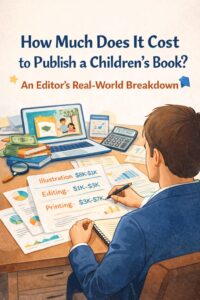
- Editing: $300–$800, depending on depth and experience
- Cover design: $150–$500 for a professional poetry-specific design
- Interior formatting: $100–$300 for clean, readable layout
- Proof copies and test prints: $20–$100, depending on formats
- ISBNs: $125 for one, or less when bought in bulk
Plan your spending based on your goals. If you want to submit your manuscript to contests, many have reading fees. If you’re self-publishing and handling everything yourself, you’ll need to budget for services or software. If your goal is to tour with the book or sell at events, you may want extra printed stock.
When you price your book, consider production cost, perceived value, and what similar poetry books sell for. Most paperbacks range from $10 to $18. Ebooks are usually priced lower. Hardcovers can go higher, especially for signed or gift editions.
This stage may feel less poetic. But it’s part of the process. If you want to share your work widely, connect with new readers, and, in the truest sense, publish poetry book that lasts, these choices matter.
Publishing and Distribution
Once your book is formatted, priced, and ready, you need to choose how it will reach readers. Distribution is not just about making your book available. It’s about making it findable and deliverable, in the right places, at the right time.
There are two main questions here: where will your book be published, and how will people access it?
Platform Options for Self-Publishing
If you are self-publishing, you will likely use a platform like Amazon KDP, IngramSpark, or a hybrid service. Each has its own strengths.
Amazon KDP is the most common choice. It’s free to use, offers print-on-demand paperbacks and ebooks, and gives access to the Kindle Store. Your book can be available within days, and you can order author copies at cost. However, KDP focuses on Amazon’s ecosystem. If you only use this platform, your book may not be available in other bookstores or libraries.
IngramSpark allows for wider distribution. Books published here can be ordered by independent bookstores, libraries, and universities. The print quality is also strong. There are setup fees, though occasional promo codes can waive them. Ingram is often the best choice if you want to publish poetry book that appear professional and be accessible beyond Amazon.
Some poets use both: KDP for Amazon sales, IngramSpark for wider reach. Others go with direct sales through their website or use crowdfunding platforms like Kickstarter to pre-sell copies and fund printing costs.
No matter what you choose, keep the reader’s experience in mind. Make sure the book is available where your audience already shops or browses. That’s how you create momentum beyond launch week.
Proofs and Quality Control
Before you go live, order proof copies. This step is essential. What looks perfect on screen might appear unbalanced or broken in print.
Use this checklist when reviewing your printed proof:
- Are line breaks and stanza spacing preserved exactly?
- Is the font size readable and consistent?
- Are the margins wide enough to feel open, not cramped?
- Are there any widows or orphans (stray lines at the top or bottom of pages)?
- Does each page look clean and intentional?
For ebooks, check your file on multiple devices. Read it on a phone, tablet, Kindle, and desktop if possible. Poetry layout can shift depending on screen size and reader settings. If line integrity is lost, revisit your formatting. Tools like Kindle Previewer or Draft2Digital’s formatting software can help resolve issues.
Take your time here. How your book looks and feels matters. Readers notice care, even when they don’t have the words for it.
To publish poetry well, you don’t need a team of professionals. But you do need to pause, test, and refine until the work feels fully ready to be shared.
Launch Plan That Works for Poetry
Publishing a book doesn’t end when it goes live. That’s where the conversation begins.
Poetry has always moved through word of mouth. Through readings, shared lines, passed pages. A good launch doesn’t have to be loud or elaborate. It just has to be human. You are building connection, not hype.
Whether your audience is large or just beginning to grow, there are ways to make sure your book doesn’t disappear into silence.
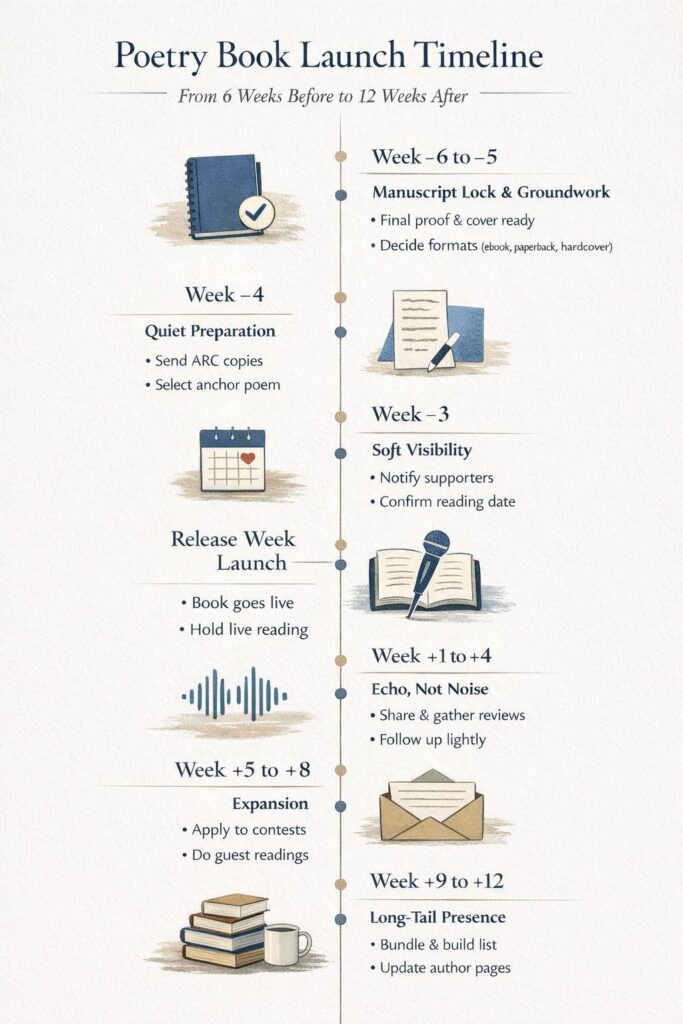
Build Momentum Before Release
The best launches begin early. Let people know something is coming, and give them a reason to care.
Start with a soft announcement. Share the book’s title. Talk about what it means to you. Give readers a glimpse behind the scenes. A photo of your desk. A quote from a poem. A few honest lines about why you wrote it.
Reach out to a few early readers. These can be friends, mentors, or fellow poets. Ask them to read the manuscript or a few selected poems and offer a blurb or short endorsement. These words can appear on your cover, on social media, or in your launch emails.
If you’ve published poems from the collection in journals, now is the time to reshare them. Mention that they’re part of your upcoming book. This ties your past work to what’s coming next.
Getting featured in a literary blog, newsletter, or local reading series can also help build visibility. While some poets use the top book marketing services, many simply build community by showing up. Your story, your poems, and your presence are already powerful tools.
Launch Week Tactics
During launch week, give people a reason to pause. It can be tempting to post nonstop, but you don’t need to be everywhere. You just need to be present, and sincere.
Consider doing a live reading, either in person or online. You could host a small event with other poets or stream a solo reading on Instagram or Zoom. Keep it simple and intimate.
Share a few poems from the book using images or short video clips. Pin a post with the purchase link. Create a behind-the-book thread, explaining how the project came together. Include photos of your notebook, your edits, your favorite lines.
If you have a newsletter, send a short sequence. One email about the release. One with a poem and story. One with a thank-you and reminder. That’s enough.
Poetry is personal. Let your launch feel that way too.
Reviews and Credibility
Asking for reviews can feel awkward, but it doesn’t have to be.
Reach out individually to readers who know your work. Ask if they’d be willing to leave a short review on Amazon or Goodreads. Emphasize that honest thoughts are more valuable than flattery. If someone says yes, follow up with a direct link and a thank you.
You can also submit your book for awards or review opportunities. Look for presses, journals, or community programs that highlight indie or debut poetry. Some contests and recognitions come with prize money, but others simply offer visibility.
Always read the fine print. If a program charges a fee, make sure it’s reputable and fair. Avoid services that promise exposure without clear guidelines or a track record of publishing quality work.
To publish your poetry with care means being thoughtful about where and how you seek recognition. Choose places that align with your values, and focus on building relationships, not just metrics.
Post Launch: Keep the Book Alive
After the launch dust settles, it’s easy to go quiet. You shared the book, celebrated the release, posted the photos… now what?
The truth is, most poetry books don’t make their biggest impact in the first week. They grow slowly, passed from hand to hand, mentioned in conversations, taught in classrooms, gifted between friends. Keeping your book alive is not about constant promotion. It’s about ongoing presence.
Long Tail Marketing
You don’t need to turn into a salesperson. But you can keep the door open.
Continue doing readings, whether online or in person. Apply to read at bookstores, libraries, open mics, or poetry series. Each reading is a chance for someone new to connect with your voice.
Look for guest post opportunities, podcast interviews, or themed anthologies. These platforms introduce you to new readers without needing a huge following. Mention your book briefly, but let the focus stay on the conversation.
If it feels right, you can revisit your metadata or test gentle ads. Sometimes a change in category or description helps your book appear in better search results. But only do this if it aligns with your goals. No need to force visibility where it doesn’t belong.
Let the book find its rhythm. Some poems bloom months after release.
Community Building
Staying connected with readers matters more than chasing algorithms.
If you don’t already have an email list, consider starting one. A short monthly update with a poem, a reading schedule, or a thought from your writing life is enough. This is how you stay in conversation with people who already care.
Some poets build membership models through platforms like Patreon. Others grow through local workshops, writing circles, or teaching. You don’t need a massive audience. You need a meaningful one.
Your book can open doors. It might lead to invitations, commissions, collaborations, or teaching gigs. When you publish poetry book work that reflects who you are, it becomes part of your larger creative path.
Keep showing up. Keep listening. The book lives through you.
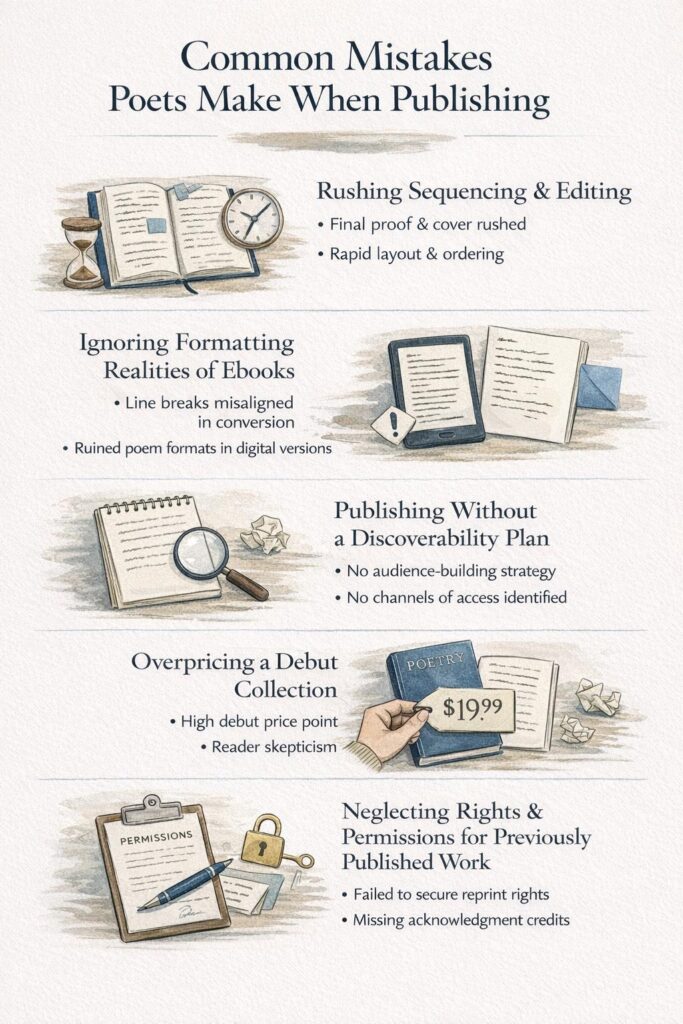
Common Mistakes Poets Make When Publishing
Publishing a poetry book is exciting. It’s also easy to rush. Many poets move too quickly, skip crucial details, or misunderstand what the process actually requires. These mistakes are common, but avoidable.
Here’s what to watch out for as you prepare to release your work.
Rushing Sequencing and Editing
Writing the poems is one thing. Turning them into a strong, connected manuscript is something else. Many poets submit their work without taking time to revise the order, remove weaker pieces, or consider how the poems speak to each other.
Your manuscript deserves time. Read it aloud. Print it. Move things around. Find the pacing. Every poem should have a reason to be there. Your editing process is just as important as the writing itself.
Ignoring Formatting Issues in Ebooks
Poetry does not convert well by default in digital formats. Line breaks, spacing, and indentation often shift during the upload process. If you skip testing your ebook layout, the final product might confuse or frustrate readers.
Use formatting tools that allow manual control. Preview your file on multiple devices. Preserve the visual rhythm of the poems, just like you would in print.
Publishing Without a Plan for Discoverability
Poets sometimes believe their work will be found on its own. But even a beautiful book needs help reaching readers. If you release your book without a plan, it may go unnoticed no matter how strong the writing is.
Think about your network. Schedule a few posts. Organize a reading. Tell the story behind the book. Visibility grows through small, genuine actions.
Overpricing a Debut Collection
Setting a high price might feel like you’re valuing your art. But most debut collections benefit from accessibility, not exclusivity. If your book is priced higher than similar titles, some readers may hesitate.
Look at other poetry books from small presses or indie authors. Aim for a fair price that reflects quality but still invites people in.
Overlooking Rights and Permissions
If any of your poems were published elsewhere, you must confirm your right to republish them. Many journals allow this after a certain time, as long as you provide credit. Others may have restrictions.
Review every poem. Check the original agreement or website. If you’re not sure, contact the publisher. It’s a simple step that protects your work and your reputation.
FAQs
1. How long should a poetry book be?
It depends on the format. A chapbook usually contains 15 to 30 pages of poems. A full-length collection ranges from 50 to 100 pages. Always check submission guidelines if you’re sending to a press or contest.
2. Should I a chapbook first or go straight to a full collection?
Start with what fits your work best. Chapbooks are great for focused themes, experimentation, or a shorter body of work. A full collection is better when you have a broader arc or larger body of strong poems. There’s no required order.
3. Do I need an agent to publish a poetry book?
No. Most poetry publishers do not work with agents. You can submit directly to small presses, contests, and open reading periods. Agents are rarely involved in poetry unless the work crosses into other genres.
4. Can I self-publish poems that were previously published elsewhere?
Yes, as long as you have the right to reprint them. Most journals allow republication with proper credit. Always check the original agreement or website. If you’re unsure, ask the editor.
5. What is the best order to arrange poems in a collection?
There’s no single rule, but your collection should flow with intention. Start with a strong opener, create pacing with shifts in tone or theme, and close with something that resonates. Grouping poems into sections can also help shape the experience.
6. How do I format poetry so line breaks do not get messed up in ebook editions?
Use hard returns at the end of every line. Avoid relying on tabs or automatic spacing. Always preview your file on multiple devices. Use formatting tools or software that preserve fixed layout when needed.
7. Do I need an ISBN for my poetry book?
If you want to sell your book through retailers or libraries, yes. You need a unique ISBN for each format: one for paperback, one for ebook, one for hardcover. You can use a free one from a platform like Amazon, or purchase your own for full control.
8. How much does it cost to publish a poetry book?
Costs vary. Editing might range from $300 to $800. Cover design could cost $150 to $500. Formatting, ISBNs, and proof copies add to the total. A careful, budget-conscious self-publishing plan can be done for under $1,000, though many poets spend more for professional support.
9. How do I get my poetry book into bookstores?
Start with local stores and independent bookshops. If your book is distributed through IngramSpark, it becomes easier for stores to order it. You can also sell on consignment, which means they carry the book and pay you only after it sells. Always approach bookstores with respect and clear information.
10. What are reputable ways to promote poetry without feeling salesy?
Host readings. Share a few poems online. Write about your process. Submit your book for review or to awards. Reach out to podcast hosts or newsletters that focus on poetry. Focus on connection, not sales language.
11. Should I publish on Amazon only or publish wide?
Amazon-only can be easier and faster. Publishing wide, through platforms like IngramSpark or Draft2Digital, gives you more reach. It depends on your goals. Some poets use both for different purposes.
12. How many poems should I post online before publishing a book?
You can post a few, but avoid sharing the entire manuscript. Many publishers accept poems that have appeared online or in journals, as long as you retain rights. Think of online posts as a preview, not the full picture.
Conclusion
Publishing a poetry book is not about chasing trends or perfect timing. It is about listening to your own work and deciding it is ready to take another form. A form others can hold, return to, and carry with them.
Whether you submit to a press, enter a contest, or take the self-publishing route, each choice matters. But what matters more is why you are doing it. This process is not just technical. It is personal. You are shaping the experience of your poems beyond the page where they were first written.
There is no single formula for how to publish poetry book work with success. What exists is a path shaped by intention, clarity, and care. You do not have to rush. You do not have to follow someone else’s exact model. You just need to stay present with your work and keep moving one step at a time.
Your poems already carry weight. Let the book become the space where they land, settle, and speak.