Start ghostwriting from scratch with this beginner-friendly 2026 guide. Learn the skills, niches, samples, pricing, and client-finding steps you need to land your first ghostwriting project fast.
Introduction
You love writing. You are good at writing. People keep telling you, “You explain things so clearly,” but you have no clue how to turn that into paid work. And when you finally look up ghostwriting for beginners, it suddenly feels like this secret world that only “real writers” get access to.
Here is the part nobody says out loud: a huge percentage of the books, newsletters, speeches, and LinkedIn posts you see every day were not written by the person whose name is on them. They were written by someone like you. Someone who knows how to listen, understand a person’s ideas, shape them into something readable, and write in a voice that is not their own.
You do not need an English degree for that.
You do not need a massive portfolio.
You need solid writing skills, steady communication, and the willingness to learn fast.
I have walked this path, felt the confusion, and sorted through the noise. In this guide, you will get a clear and practical breakdown of how beginners actually start. You will learn the skills to practice, the samples to create, the niches that make you stand out, the prices that make sense, and the places where your first real clients are waiting.
By the end, you will know exactly how to take your first step into ghostwriting without second-guessing every move.
What Exactly Is Ghostwriting?
If you have ever wondered how busy founders, CEOs, influencers, and even local business owners manage to publish so much content, here is the quiet truth. Many of them hire someone else to write it. That is the core of ghostwriting. You create the words, but the credit goes to the client. They get the spotlight. You get the paycheck.
Ghostwriting shows up in more places than most people realize. It is not only for celebrities or bestselling authors. Beginners often work on:
- Books and memoirs
- Blog posts and thought leadership articles
- Email newsletters and funnels
- Speeches and presentations
- Social media content and LinkedIn posts
- Scripts for YouTube videos, podcasts, and online courses
When people look for a ghostwriter for hire, they are not just looking for a good writer. They want someone who can sound like them. That part is different from regular freelance writing. Ghostwriting requires voice matching, deeper collaboration, sensitivity, and a willingness to stay invisible. You often sign NDAs, keep client material private, and never publicly claim a project unless you get permission.
Is staying invisible a good thing? It depends on your personality. Some writers love helping others shine and enjoy the behind the scenes role. Others prefer public credit. Neither is right or wrong. The pros include great pay, deep creative work, and long term relationships. The cons include needing to stay quiet about your best work.
If you understand the trade off, ghostwriting becomes one of the most flexible and rewarding writing careers you can start.
Is Ghostwriting Right For You? (Mindset and Personality Fit)
Before you dive in and start taking clients, it helps to understand whether the work actually fits who you are. Ghostwriting asks you to step into someone else’s mind, capture their rhythm, ask smart questions, and write with a level of empathy that feels almost like acting on the page.
The people who thrive in this field usually share a few traits. They are naturally curious and enjoy researching topics they know nothing about. They can mimic tone and voice. They listen closely. They ask thoughtful questions. They do not need public credit to feel proud of their work. If you have ever edited someone’s writing and instinctively improved it, that is a good sign you might enjoy this path.
You will often see ex journalists, content writers, teachers, editors, and even ebook writers transition into ghostwriting because the skill overlap is strong. They already know how to break down ideas, shape structure, and communicate clearly.
If you are not sure where you stand, here is a simple yes or no check. The more times you answer yes, the more likely ghostwriting will feel natural.
- Do you enjoy researching topics you know nothing about?
- Can you write in different tones?
- Do you communicate well with clients and coworkers?
- Are you comfortable not getting public credit?
- Does interviewing people sound interesting rather than stressful?
- Can you take feedback without taking it personally?
- Are you willing to revise your work until it matches the client’s voice?
- Do you enjoy helping others express ideas they struggle to put into words?
- Are you self motivated and able to manage deadlines?
- Do you like shaping raw ideas into something clear and compelling?
If you read through those questions and felt something click, you are already closer than you think to becoming a strong ghostwriter.
IV. Core Skills You Need Before You Take Clients
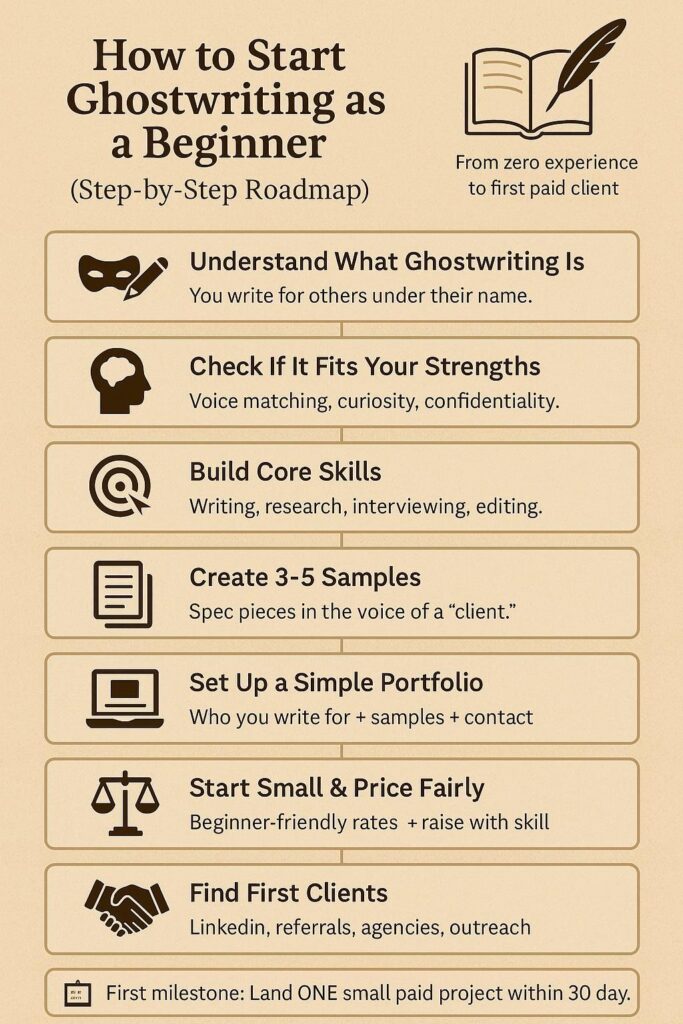
Before you take on your first paid project, you need a foundation that helps you deliver work clients can trust. Ghostwriting is a mix of creative skill, emotional intelligence, and simple business habits. When people look for help, they want someone who can make their ideas sound sharper and more confident than they could themselves. This section breaks down the core skills that matter most when offering ghostwriting for beginners, and how you can start strengthening them today.
Strong Writing Skills
You do not need to write like a novelist. What you need is clarity. Clients value writing that feels clean, structured, and easy to follow. Your job is to make ideas make sense. To get there, focus on:
- Grammar that does not distract.
- Sentence flow that feels natural.
- Structure that guides the reader from one idea to the next.
- Pacing that keeps the reader engaged without dragging.
- Explanations that feel simple rather than overly technical.
A great ghostwriter makes complex ideas feel lighter. If your writing is readable, confident, and clear, you are already ahead of many writers starting out.
Research Skills
Ghostwriters often jump into topics they have never studied before. One week you might write about marketing. The next week it might be leadership, wellness, or real estate. You need to know how to research quickly and responsibly. This means skimming for key ideas, identifying credible sources, and turning complicated information into simple, practical insights. If you can Google effectively, summarize information well, and avoid misinformation, you are on the right track.
Voice and Style Adaptation
This is one of the most important skills. Ghostwriting is not about sounding like yourself. It is about sounding like the client. You should be able to shift tone the way an actor shifts characters. Try practicing by:
- Rewriting the same paragraph in a formal tone and then in a casual one.
- Studying a public figure’s writing style and mimicking it.
- Practicing first person writing from perspectives that are not your own.
Clients work with you because you can capture their voice. This single skill can make you stand out.
Interviewing and Listening Skills
For books, memoirs, and long form content, interviews are the heart of the process. You need to guide conversations, ask questions that uncover deeper stories, and listen closely for emotional beats or phrasing your client naturally uses. Great interviewing leads to accurate, honest writing.
Basic Business Skills
Ghostwriting is a service. Communication matters. Deadlines matter. Managing expectations matters. You need simple but reliable habits:
- Responding promptly.
- Keeping deadlines without reminders.
- Asking clarifying questions when needed.
- Tracking deliverables and revision rounds.
Clients care about reliability as much as talent.
When You Are Skilled Enough to Start Charging
You do not need to wait until you feel “ready.” If you can write clearly, adapt tone, research confidently, and communicate professionally, you are capable of handling beginner level projects. Improvement happens through real work, not endless preparation.
Choose Your Ghostwriting Niche (Or Starter Focus)
Choosing a niche is one of the simplest ways to stand out as a beginner. When you try to appeal to everyone, clients struggle to understand what you actually do. When you focus on a specific type of writing or a specific type of client, you immediately look more skilled, more relevant, and more confident, even if you are just starting out. This is especially helpful when people are searching for a ghostwriter for hire, because they want someone who understands their industry or their style of content.
Why Having a Niche Helps You Charge More
A niche builds trust. It tells clients, “I know your world, your audience, and the type of content you need.” That confidence allows you to raise your rates faster and attract higher quality work. A generalist can get small jobs, but a specialist earns more predictable and consistent income.
Beginner Friendly Niches
You do not need to choose a lifelong niche. You just need a starting point. Here are niches that work well for beginners because the demand is steady and the learning curve is manageable.
- Blog and SEO content
Great for writers who enjoy research and clear, structured writing. - Newsletters for small businesses
Perfect if you like conversational writing and recurring work. - LinkedIn posts for founders and coaches
Ideal if you enjoy short, punchy thought leadership content. - Short eBooks and lead magnets
A good fit if long form writing feels natural to you.
These areas give you consistent practice and help you learn how different clients think and communicate.
Books and Memoirs as a Later Path
Book ghostwriting can pay extremely well, but it demands more experience. You need interviewing skills, project management, and a strong sense of narrative. Many writers start with short form content first, then move into books when they feel ready.
Still, if you enjoy deep storytelling or long form structure, you can explore book projects early, even if you begin with smaller ones like short guides or business playbooks.
How to Pick a Starting Niche
Look at your background and interests. What do you already know? What kinds of content do you enjoy reading? What topics feel easy for you to explain?
Your ideal niche sits at the intersection of:
- What you enjoy writing
- What you understand
- What people will pay for
You can always change niches later. Your first niche is simply your launchpad, not your final destination.
Build Skills and Samples When You Have No Experience
Every ghostwriter starts with the same uncomfortable question. How do you get clients if you have no samples, but how do you get samples if you have no clients? The good news is that you can create a strong set of writing samples on your own. Clients care far more about your ability to write in their voice and format than they care about your past job titles. Even experienced ebook writers began with self made samples.
Here is a step by step way to build the kind of portfolio that makes clients pay attention.
1. Read Widely in Your Target Niche
Study the formats you want to write. If you want to write blogs, read high performing blogs. If you want to write newsletters, subscribe to the ones your ideal clients love. Pay attention to structure, pacing, tone, and how writers transition between ideas. The more you read, the more you understand what “good” looks like in that niche.
2. Practice With Personal Projects
Start creating your own pieces. Write essays, blog posts, short guides, or whatever format fits your chosen niche. Treat these pieces like paid work. Edit them. Polish them. Show you can structure ideas clearly and deliver something that feels professional.
3. Create “Ghost” Samples
This step is incredibly powerful for beginners. Choose a fictional client or a real public figure and write a sample piece in their voice. Do not copy anything they have published. Instead, study their tone and style, then create an original piece that matches it. This proves you can adapt your writing, which is the core of ghostwriting.
4. Publish or Guest Post
If you want more credibility, publish some of your work. Platforms like Medium make this easy. You can also pitch guest posts to niche blogs or small business sites. This helps you show that editors see your writing as publishable and gives you links to include in your portfolio.
How Many Samples You Need
You do not need a giant portfolio to start pitching. Aim for:
- Three to five short form samples, such as blogs, newsletters, or LinkedIn posts
- One or two long form samples, such as guides or short eBooks
This range shows versatility without overwhelming potential clients. Having polished samples gives you the confidence to pitch and the proof clients need to say yes.
Set Up Your Beginner Ghostwriting Portfolio
When you are entering the world of ghostwriting for beginners, a simple and clean portfolio can make you look far more established than you feel. Clients do not need to see a perfect website or a long list of past projects. They just need proof that you can write clearly, adapt to different voices, and communicate professionally. Your portfolio is your introduction, your credibility builder, and your first chance to show clients they can trust you.
Why a Simple Portfolio Matters
A clear, focused portfolio shows clients exactly what you do and who you do it for. It signals professionalism, even if you are still early in your career. Think of it the way professional book editors think of sample edits. Clients want to see your capability, not your entire history.
You can build something effective in a weekend. It does not need to be fancy. It just needs to show your skill.
What to Include in Your Portfolio
When setting up your beginner portfolio, focus on the essentials:
A Positioning Statement
One or two lines that tell clients who you write for and what type of content you create. For example: “I write newsletters and thought leadership content for small business owners.”
Three to Seven Writing Samples
Pick your strongest pieces. These should match the niche you want to attract. Include a mix of short and long form content so clients can see your versatility.
A Short, Trust Building Bio
You do not need a degree to sound credible. Focus on reliability, communication skills, and your process. Clients want someone who is easy to work with and delivers consistently.
A Simple Contact Method
This can be a form or a direct email address. Make it easy for clients to reach out.
If You Cannot Build a Website Yet
You can still create a solid portfolio. Here are fast alternatives:
- A Google Drive folder with organized samples
- A Contently profile
- A Medium page with published posts
- A LinkedIn Featured section that showcases your best work
Clients care more about clarity than design. If your samples show strong writing and clear thinking, they will not be bothered by a simple layout.
Your portfolio is your proof. It is the thing that turns interest into real inquiries. Once it is up, you are ready to start pitching with confidence.
How To Price Your First Ghostwriting Projects
Pricing is one of the most uncomfortable parts of starting out, but it is also one of the most important. Many beginners guess their rates, undercharge out of fear, or copy prices from random freelancers online. You do not need to do that. You just need a simple framework that helps you price fairly and confidently while you gain experience.
Common Pricing Models
Ghostwriters use a few standard pricing structures. You can start with any of these depending on the type of work you want to do.
Per Word or Per Article
This is common for blogs, SEO content, and shorter pieces. It gives clients predictable costs and gives you a clear sense of how much you will earn per assignment.
Per Project
This works well for longer pieces such as eBooks, full websites, sales pages, and book chapters. A single project fee simplifies everything for both you and the client.
Retainers
If you write recurring content like newsletters or social posts, a monthly retainer allows you to earn consistent income while giving clients reliable support. Many ghostwriters prefer this model once they have steady clients.
Factors That Affect Pricing
Your rates depend on more than just word count. A few key factors influence your final price:
- Topic complexity
- Amount of research required
- Number of interviews
- Turnaround time
- Revisions included
- Whether the project requires strict confidentiality
Ghostwriting often pays more than bylined content because you are writing in someone else’s voice, keeping their information private, and helping them sound like a leader.
Realistic Beginner Price Ranges
These are not promises or fixed rules, but general ranges many beginners use:
- Short blog posts: lower to mid range fees
- Newsletters and social content: monthly retainers that start small but grow with experience
- Short eBooks: entry level project fees
- Full book ghostwriting: higher earning potential once you have samples and experience
Your prices will rise as you build your portfolio, refine your process, and deliver consistent results.
Why You Should Not Undercut Yourself
It might feel easier to charge very low rates, but it often leads to burnout and frustration. Charge beginner friendly rates that still respect your time. You are offering a valuable service, and clients who understand that will be the clients who hire you again and again.
Where To Find Your First Ghostwriting Clients
Finding your first clients can feel like the hardest part of the journey, but it becomes much easier when you approach it with clear strategy instead of guesswork. Many people searching for ghostwriting for beginners assume they need huge platforms or years of experience before anyone will hire them. That is not true. Your first clients usually come from simple, practical steps that build momentum quickly.
Start With People You Already Know
Your warm network is the most overlooked place to find early clients. Past employers, coworkers, local business owners, or people who already trust your communication skills are far more likely to take a chance on you than strangers online. You can offer to write a blog post, a newsletter, or a short guide to help them get started.
Use Online Platforms and Marketplaces
Freelance marketplaces are crowded, but they still offer real opportunities for beginners.
- Upwork
- Fiverr
- PeoplePerHour
- Scripted
- Content agencies
- Ghostwriting agencies
Set up a clear profile, upload your samples, and start applying to jobs daily. Consistency is the key on these platforms.
Leverage Social and Content Based Methods
Your social presence does not need to be big. It just needs to show your writing skill and reliability.
- Post short writing samples on LinkedIn
- Share insights about writing or content creation
- Comment thoughtfully on posts by founders, coaches, or creators
- Publish helpful content that shows you understand voice and clarity
This positions you as a writer who knows how to communicate well, and that alone attracts early leads.
Guest Posting in Your Niche
Writing for niche blogs, online magazines, or industry sites gives you instant credibility. Editors see you as reliable, and readers see you as someone who understands a specific topic. This makes outreach easier.
Join Writing and Ghostwriting Communities
Communities create opportunity. Look for:
- Discord groups
- Facebook writing groups
- Reddit writing communities
- Professional writing associations
Many members share job posts or refer work to beginners who show motivation and professionalism.
Use Simple Outreach Templates
Start with a short, respectful message like:
“Hey [Name], I noticed you publish a lot of content. If you ever need help writing blogs or newsletters, I would love to support you. I have samples available if you want to see my style.”
Friendly, direct outreach works far better than trying to sound overly formal or robotic.
You do not need hundreds of leads to start. You only need a handful of people who see your value and want support. Consistent outreach builds that quickly.
How a Beginner Ghostwriting Project Actually Works (Step by Step)
One of the biggest fears beginners have is not knowing what happens after a client says yes. The process feels mysterious until you see it laid out clearly. Once you understand the steps, you will feel far more confident taking on your first project. Here is the simple workflow most ghostwriting projects follow from start to finish.
1. Inquiry and Discovery Call or Questionnaire
Everything begins with a short conversation or a written questionnaire. This is where you learn:
- The client’s goals
- The audience they want to reach
- The tone or voice they prefer
- The scope of the project
- The timeline and deadline
This is not a sales pitch. It is a clarity session. You are making sure you and the client understand each other before moving forward.
2. Proposal, Quote, and Contract
Once you know the project details, you create a proposal and a price. The contract should outline:
- Deliverables
- Deadlines
- Number of revisions
- Payment terms
- Confidentiality details if needed
This protects both you and the client. Never skip a contract, even for small projects.
3. Onboarding and Voice Research
This is where you gather everything you need to write in the client’s voice. It usually includes:
- A detailed questionnaire
- Samples of their past writing
- Recordings or videos of them speaking
- One or more interviews
- Notes on tone, phrasing, and personal stories
The better this step goes, the easier the writing becomes.
4. Outline and Approval
Before writing the full piece, you create:
- A content brief for blogs or articles
- A chapter by chapter outline for books
- A structured plan for scripts or long form content
The client reviews and approves it so you both stay aligned from the beginning.
5. Drafting and Revision Cycles
You start writing. Many ghostwriters send a short sample early, such as the first page or first section, to confirm the tone. Then you deliver the full draft. Most projects include one or two rounds of revisions. Clarity and communication make this stage smooth.
6. Final Polish and Delivery
After revisions, you clean up the writing, proofread it, format it, and deliver the final files. These are usually provided in a shared document or editable format the client can use immediately.
7. Collect a Testimonial and Ask for Referrals
Do not skip this. Testimonials build your credibility, and referrals multiply your opportunities. One happy client can lead to three more. This step alone can accelerate your career with very little extra effort.
Ethics, Credit, and NDAs in Ghostwriting
Ghostwriting is built on trust. Clients open up their ideas, their stories, and sometimes their personal histories so you can shape them into something meaningful. Because of that, ethics matter. Clear boundaries and professional standards protect both you and the client, and they help you build a reputation that leads to long term success.
Why Transparency and Fair Pay Matter
Ghostwriting requires emotional labor, creative work, and confidentiality. Clients rely on you to help them communicate clearly and authentically. That means you deserve fair compensation for your time and skill. When you price responsibly and communicate clearly, you create a healthier relationship from the start.
The Ongoing Discussion About Credit
Some projects give ghostwriters partial credit, like a “with” or “as told to” mention. Others keep the writer’s involvement completely private. The debate around credit is especially strong in celebrity memoirs, where the writer often shapes the entire narrative.
There is no single correct answer here. Some writers love staying invisible. Others want their work recognized. What matters is agreeing on expectations before the project begins.
Typical Confidentiality and NDA Expectations
Most ghostwriting projects involve some level of confidentiality. NDAs are common for:
- Business content
- Personal stories
- Internal documents
- Projects involving sensitive information
An NDA protects the client, and it clarifies what you can and cannot share publicly. It also protects you because it sets clear boundaries.
How To Talk About Your Work Without Breaking NDAs
Even with strict confidentiality, you can still build your portfolio and credibility. Here are safe ways to do that:
- Use anonymized samples that do not reveal the client.
- Ask for permission to share small excerpts privately.
- Create spec samples that show your skill without referencing real projects.
- Collect testimonials that focus on the client’s experience rather than details of the work.
Ethics in ghostwriting come down to honesty, communication, and respect. When you approach every project with those values, you build trust that leads to stronger opportunities and long term clients.
Common Beginner Mistakes To Avoid
When you step into ghostwriting for beginners, it is easy to make missteps that slow your progress or create unnecessary stress. Most mistakes come from trying to rush, saying yes too quickly, or assuming ghostwriting is just “regular writing with someone else’s name on it.” Here are the most common pitfalls and how to avoid them so you can start confidently and grow steadily.
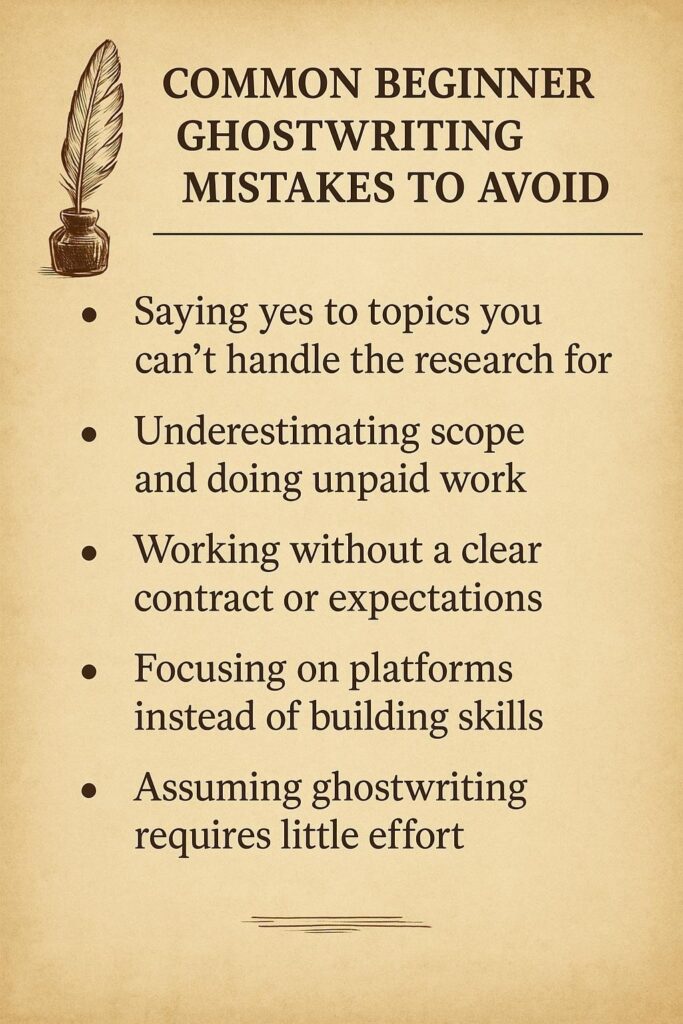
Saying Yes to Every Topic
It is tempting to accept any project that comes your way, especially when you are eager for experience. But if the topic requires heavy research in a field you do not understand, you can easily get overwhelmed. Start with subjects you feel comfortable exploring, then expand gradually.
Under-Scoping Projects
Beginners often promise more than they realize. A client might ask for “a quick blog post,” but once you start, it may require interviews, research, outlining, and revisions. Clarify expectations before you agree to anything. A clear scope prevents unpaid labor and frustration.
Skipping Contracts
Working without a contract is risky. You need written confirmation of deliverables, timelines, revisions, and payment terms. A contract protects you from clients who change their minds or ask for more work without additional pay.
Ignoring Skill Development
Platforms, logos, and marketing can feel exciting, but they do not replace skill. Writing, researching, interviewing, and adapting voice should remain your core focus. If you improve these consistently, clients will notice, and your opportunities will grow.
Undercharging Out of Fear
Charging too little makes clients undervalue your work and leads to burnout. Set beginner-friendly rates that still honor your time and effort. Confidence in your pricing builds trust.
Treating Ghostwriting Like Easy Passive Income
Some people assume ghostwriting is quick money. It is not. It requires emotional intelligence, structure, communication, and effort. The better your process, the easier it becomes, but it is not something you can rush without sacrificing quality.
Not Asking Enough Questions
The fewer questions you ask, the more likely you are to miss the client’s voice or intent. Curiosity is a strength. Good ghostwriters ask detailed questions because they care about accuracy.
Avoiding these mistakes will help you build a smoother, more professional workflow and attract clients who value your work. Each misstep you avoid saves time, protects your energy, and strengthens your reputation.
Next Steps: Your 30-Day Beginner Ghostwriting Action Plan
Starting your ghostwriting career does not have to feel overwhelming. When you break it down into weekly steps, the path becomes clear and manageable. Many successful ghostwriters, including seasoned ebook writers, began with simple, consistent actions just like these. Follow this 30-day plan, and by the end of the month, you will have samples, a portfolio, and real outreach underway.
Week 1: Learn the Landscape
- Read three to five in-depth guides on ghostwriting and freelancing.
- Study examples of great writing in your target niche.
- Decide on your starter niche and the type of clients you want to work with.
- Outline what kind of samples you will create next week.
This week is all about clarity. You are building the foundation.
Week 2: Create Your Samples and Portfolio
- Draft at least three pieces of sample work in your chosen niche.
- Edit them carefully so they represent your best writing.
- Build a simple online portfolio or one-page site.
- Upload your strongest pieces and write a short, clear bio.
These samples become your proof of skill. They will make your pitches more effective and give clients confidence.
Week 3: Build Connections and Prepare Your Pitch
- Join one or two writing or ghostwriting communities.
- Participate in discussions so people begin to recognize your name.
- Create two or three simple outreach templates for different types of clients.
- Prepare short pitches you can send through email or LinkedIn.
This week helps you build visibility and confidence before you reach out.
Week 4: Start Pitching and Land Your First Project
- Send 20 to 30 personalized pitches to potential clients or agencies.
- Use your samples to show what you can do.
- Follow up respectfully if you do not hear back after a few days.
- Aim to secure your first small paid project, even if it is at a beginner rate.
Momentum comes from taking action. Once you land your first client, the path becomes clearer, your confidence grows, and your portfolio expands.
This simple four-week plan gives you everything you need to start your ghostwriting career with structure and direction. Follow it consistently, and the results will come.
FAQs
1. Do I need a writing degree to become a ghostwriter?
No. Clients care far more about your writing samples than your academic background. A degree can help, but many successful ghostwriters come from journalism, marketing, teaching, or self taught experience. What matters is your ability to write clearly and adapt to different voices.
2. How much can beginner ghostwriters earn?
Rates vary based on niche, experience, and project type. Beginners often start with lower per word or per project rates for blogs and short content. As your skills grow and you build testimonials, your rates can increase. Book ghostwriting usually pays more but requires more time and interviewing.
3. Can I start ghostwriting without any previous clients?
Yes. Many beginners start with practice samples, guest posts, or self published pieces. Clients want evidence of skill, not job titles. If your samples show clear writing and voice adaptation, that is enough to begin pitching.
4. How do I show my work if everything is confidential?
You can still build a portfolio by using anonymized samples, asking clients for permission to share small excerpts privately, creating spec samples in the style of your ideal clients, and gathering testimonials that do not reveal project details.
5. Where is the best place to find my first ghostwriting job?
There is no single “best” place. Most beginners combine freelance marketplaces like Upwork, LinkedIn outreach, content agencies, writing communities, and direct outreach to business owners or creators they already follow.
6. What ghostwriting formats are easiest for beginners?
Short form content such as blogs, newsletters, and LinkedIn posts is usually the easiest starting point. These projects have shorter timelines and help you build experience quickly. Long form books and memoirs require more research and interviewing, so many writers transition into those after gaining confidence.
7. How long does it take to become a professional ghostwriter?
You can start charging beginner rates within a few months if you practice consistently, build samples, and pitch regularly. Higher paying, consistent work often takes more time, depending on how quickly you sharpen your skills and refine your niche.
8. Is ghostwriting still worth it in the age of AI?
Yes. AI tools can assist with drafts, but clients still pay well for human judgment, nuance, interviewing, voice capture, and the ability to structure ideas into compelling narratives. Human ghostwriters understand emotion, context, and story in a way tools cannot replace.
Conclusion
Stepping into the world of ghostwriting for beginners can feel intimidating at first, but once you break the process down, it becomes far more approachable than most people imagine. You now understand the core skills you need, the niches that help you stand out, the kind of samples that attract clients, and the simple systems that make your writing business feel professional instead of chaotic.
Ghostwriting is not about having a perfect background or a flawless portfolio. It is about being curious, listening well, and helping someone else say what they cannot quite express on their own. If you can do that with clarity and consistency, there is a place for you in this field.
Take the next step, even if it feels small. Build your samples. Send the outreach message. Apply for the project. Every action builds momentum. With the right mix of practice and persistence, you can turn your writing talent into a reliable, flexible career that grows with you.
Your first client is not as far away as you think.